The door is ordinary. You have said so twice. The rogue checks the hinges, the wizard wants to know what sort of wood it is, and someone suggests going through the wall. Beyond it waits the encounter you spent yesterday evening preparing. For now, though, the door has the floor.
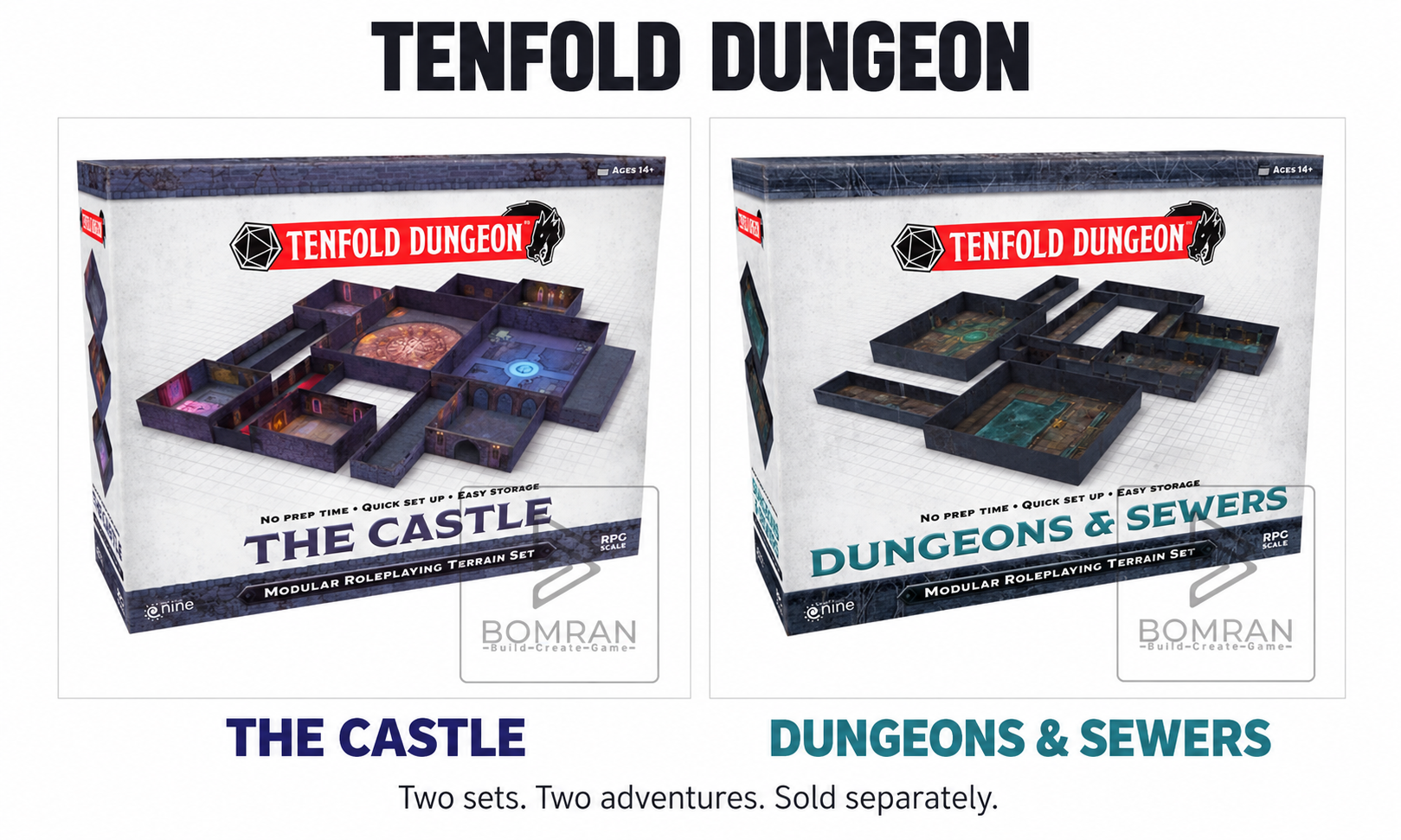
That is the pleasure of running a role-playing game: put a place in front of the players and watch them find a story you had not planned. Tenfold Dungeon gives those places a physical shape. But should your next session unfold in The Castle, with its halls, bedrooms, chapel and ramparts, or descend into Dungeons & Sewers, with water channels, a cell and something unpleasant waiting in a monster lair? Start with the adventure you want to run. The room count can wait a moment.
What is Tenfold Dungeon?
Tenfold Dungeon is modular tabletop terrain made from pre-illustrated, three-dimensional cardboard box rooms. Arrange the spaces you need, then use the supplied clips and scenic pieces to build the layout. Printed walls and details establish the location, and the floors carry a 1-inch grid. You can turn your attention to who is behind the door without first adding a scenery-painting project to your session preparation.
There is some preparation to allow for: the rooms are ready-made, but the punchboard pieces need initial preparation and the staircases need assembly. Afterwards, the smaller rooms nest inside the larger ones for storage; the whole dungeon does not fold flat. Keep the loose doors, clips and scenic pieces together when you pack away. Future-you, setting up while the players recap last week, will appreciate it.
You are buying terrain, not a complete role-playing game. Miniatures are not included, and you still need your chosen system’s rules and playing materials. If this is the beginning of your group’s adventures, our guide to starting an RPG at home will help you get everyone around the table.
Explore the Tenfold Dungeon range
Have a look at the three sets, then picture where your party would cause the most trouble. This guide concentrates on The Castle and Dungeons & Sewers. The Town was out of stock when checked on 16 October 2026; its product page has the latest availability.


The Castle vs Dungeons & Sewers: choose your kind of trouble
The Castle: a place people might actually live
A castle becomes interesting when somebody lives there. The Castle supplies a Hall, Courtyard, Chapel, Entrance, Large Bedroom, Kitchen, Guard Room and Modest Bedroom, plus Ramparts, Flooded Ramparts, a Plush Corridor and a Secret Corridor. Read that list as a GM and the questions begin: who sleeps near the guards, who has access to the kitchen, and why does this household need a secret corridor?
Those spaces suit keeps, fortified homes and occupied ruins, with room for negotiation and infiltration alongside combat. Imagine the party ignoring your imposing main entrance because a delivery is arriving at the kitchen. Let that choice matter. A servant might want help, a guard might recognise the borrowed uniform, and your carefully prepared audience can still happen—just with flour on the bard’s coat. Choose this set when the people who use a building matter as much as the threats inside it.
Dungeons & Sewers: follow the water, mind the gap
Dungeons & Sewers changes the conversation. Its Cistern Chamber, Sewer Crossing, Dark Water, Monster Lair, Stairs and Cell are joined by Slime, Overflow, Flooded, Chasm, Rat and Sluice corridors. You have chambers to investigate and passages that make the route between them part of the adventure. Set the scene with dripping water and a noise from the wrong direction, and the party has a reason to reconsider its marching order.
This is a natural setting for prison escapes, subterranean expeditions and city investigations that lead below street level. Junctions invite choices; narrow approaches make those choices feel consequential. Before play, decide what the printed water, slime and chasms mean in your rules. Can a character wade through, jump across or lose their footing? Give the players enough description to judge the danger. The artwork supplies the scene; you supply its consequences.
What comes in each box?
Once you have a setting in mind, here is the inventory. Both boxes contain 12 illustrated box rooms, 20 doors in two types, two gates and six staircases in three types. Each also supplies 16 plastic corner clips, 16 door clips and 16 T-clips. The Castle adds seven walls and one trapdoor; Dungeons & Sewers includes six walls and two pit traps.
Neither wins by having more rooms. The useful difference is what those rooms suggest when you start preparing: domestic and defensive spaces in The Castle; underground passages, chambers and hazards in Dungeons & Sewers. Pick the places you can already imagine returning to. A guard room can host a tense conversation one week and an abandoned post the next.
How big are the rooms, and will your miniatures fit?
Before the grand reveal, make room on the actual table. The largest box rooms in both sets are listed at 370 × 300 × 62 mm: the Castle’s Hall and Courtyard, and the sewer set’s Cistern Chamber and Sewer Crossing. These are individual box dimensions, not the footprint of a complete dungeon. Join several together and the layout can claim considerably more space.
The smaller pieces give the sets different shapes to work with. The Castle’s four long corridor and rampart boxes are listed at 90 × 294 × 40 mm. Dungeons & Sewers has three corridor boxes at 87 × 283 × 40 mm and three at 94 × 364 × 40 mm; its Dark Water and Monster Lair boxes measure 294 × 182 × 62 mm. Use those figures to plan for the physical pieces. They do not promise that every millimetre is unobstructed interior playing space.
Now consider the party—and whatever you intend to put in its way. The packaging describes terrain for 25–28 mm RPG miniatures, while the wider Tenfold guidance also discusses 28–32 mm skirmish gaming. These are intended uses, not a guarantee for every model. Nominal miniature scale and base diameter are different things; broad bases, outstretched weapons and impressive wings all need clearance.
Use the 1-inch grid as your starting point, then check your largest bases against the rooms, doors and corridors you plan to use. Leave space for character sheets, dice and hands reaching into the layout. Your players should be weighing up whether to enter the chamber, rather than working out how to reach their miniature without knocking over somebody’s tea.
Preparing the first encounter
Begin with the encounter you want to run, rather than all 12 rooms. Choose a main chamber, add an approach and decide where the exits lead. Fit the doors and walls with the supplied clips, prepare the staircases before the session, and check that everyone can see and reach the important spaces. Then ask yourself one useful question: what happens if the party takes the other exit? You need a possibility, not another evening’s worth of preparation.
One useful GM approach is to keep undiscovered rooms off the table and reveal them as the party explores. That is a suggestion for running the session, not a special hidden-room mechanism in the product. It keeps the layout manageable and leaves you free to describe what lies beyond it. The players can hear footsteps before they know who is making them.
Work with the fixed room shapes instead of trying to reproduce every published dungeon map square for square. Change a room’s purpose, simplify a corridor or describe an area off the table. If the party talks its way past the fight you prepared, the chamber still has a job: it is where that conversation happens. Our guide to creating an immersive RPG experience explores how terrain, description and player choice can work together.
Two encounter ideas to help you choose
Castle suggestion: the inconvenient invitation. The party has been invited to an audience in the Hall, but its missing contact was last seen near the Guard Room. A delivery through the Kitchen offers one way in; a conversation in the Courtyard or a search for the Secret Corridor offers another. Give the guards duties, the servants opinions and the host a reason to keep everyone waiting. Then let the players choose an approach. The tension comes from moving through an occupied place where being noticed matters.
Sewer suggestion: the route beneath the city. A witness has vanished below a busy district. At the Sewer Crossing, offer two clues pointing in different directions: a dropped possession towards the Cell and fresh disturbance towards the Monster Lair. Decide whether the water is unpleasant, difficult terrain or a serious obstacle, and make that danger legible before anyone steps in. You have a route to investigate and a decision to argue over, with room for the party to surprise you.
These are original scenario suggestions, not descriptions of the supplied adventures. Borrow the situations, change the stakes and adjust them to your group’s rules, tone and experience. The best version is the one your players find a reason to care about.
Included 5e adventures and other game systems
If you would rather begin with a supplied adventure, The Castle includes the 5e adventure Vaedra’s Lair, centred on a cliffside keep and its siren story. Dungeons & Sewers includes The Bellow Below, an underground adventure beneath Malrenburg involving troubling dreams. Each offers a particular story to start from when using the set’s accompanying 5e material.
Keep the adventure rules and the physical scenery separate in your planning. The terrain can serve other suitable RPG or skirmish sessions, but that does not make the included adventures automatically compatible with another system. Check movement, line-of-sight and terrain requirements, and expect to adapt encounters or measurements where necessary. Our role-playing games range is a place to find rules and adventures that suit your table.
Can you combine the sets?
Yes—Tenfold Dungeon sets are designed to mix. A respectable castle with an unwelcome route beneath it practically suggests its own investigation. Even so, you do not need both boxes to begin. Start with the environment your campaign will revisit, learn which room shapes earn their place at the table, and add another setting when you have a use for it.
Bomran’s Tenfold Dungeons range also includes The Town, shown in the carousel above for anyone considering the wider range. It was out of stock when checked on 16 October 2026. Check its product page for current availability before making plans around it.
Which Tenfold Dungeon set should you choose?
Think about the session you are itching to run. Choose The Castle for inhabited rooms, defensive spaces and encounters where conversation, deception or a quiet way in can matter as much as combat. Choose Dungeons & Sewers for underground exploration, winding approaches and the uneasy business of following a clue somewhere nobody wants to go.
Both were listed at £49.50, with one in stock each, when checked on 16 October 2026. Prices and availability can change; the product pages have the latest position. You do not need to fill the table to give the party somewhere worth exploring. Choose a few rooms, put something worth finding beyond them, and leave space for an unexpected plan. When the players finally open that ordinary door, you have somewhere to take the story.
Build your next D&D adventure
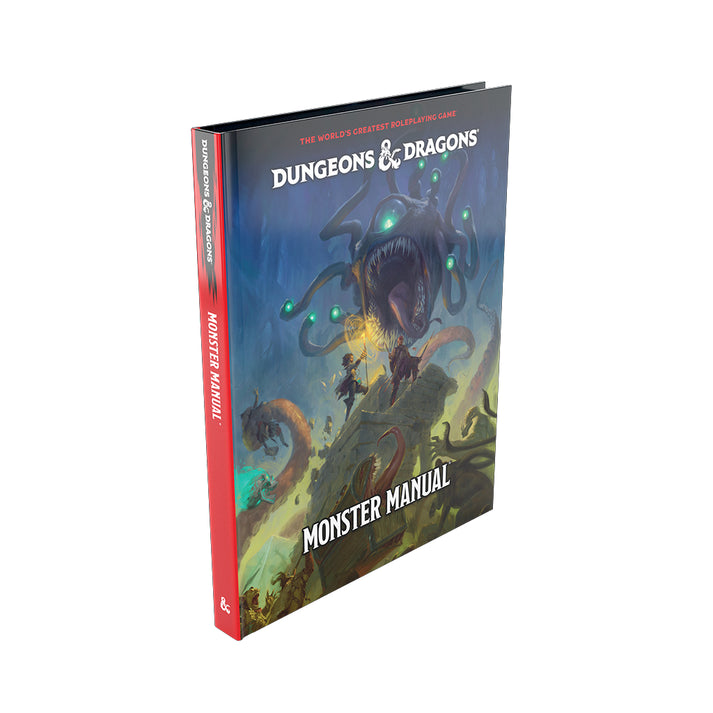
If you are taking that story into D&D, the revised fifth-edition core books below cover character creation, running adventures and choosing creatures: the Player’s Handbook (2024), Dungeon Master’s Guide (2024) and Monster Manual (2025). They are sold separately from the terrain. Use the rules your group has agreed on, adapting encounters and room layouts where needed; owning the scenery does not make every adventure map a square-for-square fit.
-

D&D Player’s Handbook (2024)
£32.50 -

D&D Dungeon Master’s Guide (2024)
£35.00 -

D&D Monster Manual (2025)
£32.50