
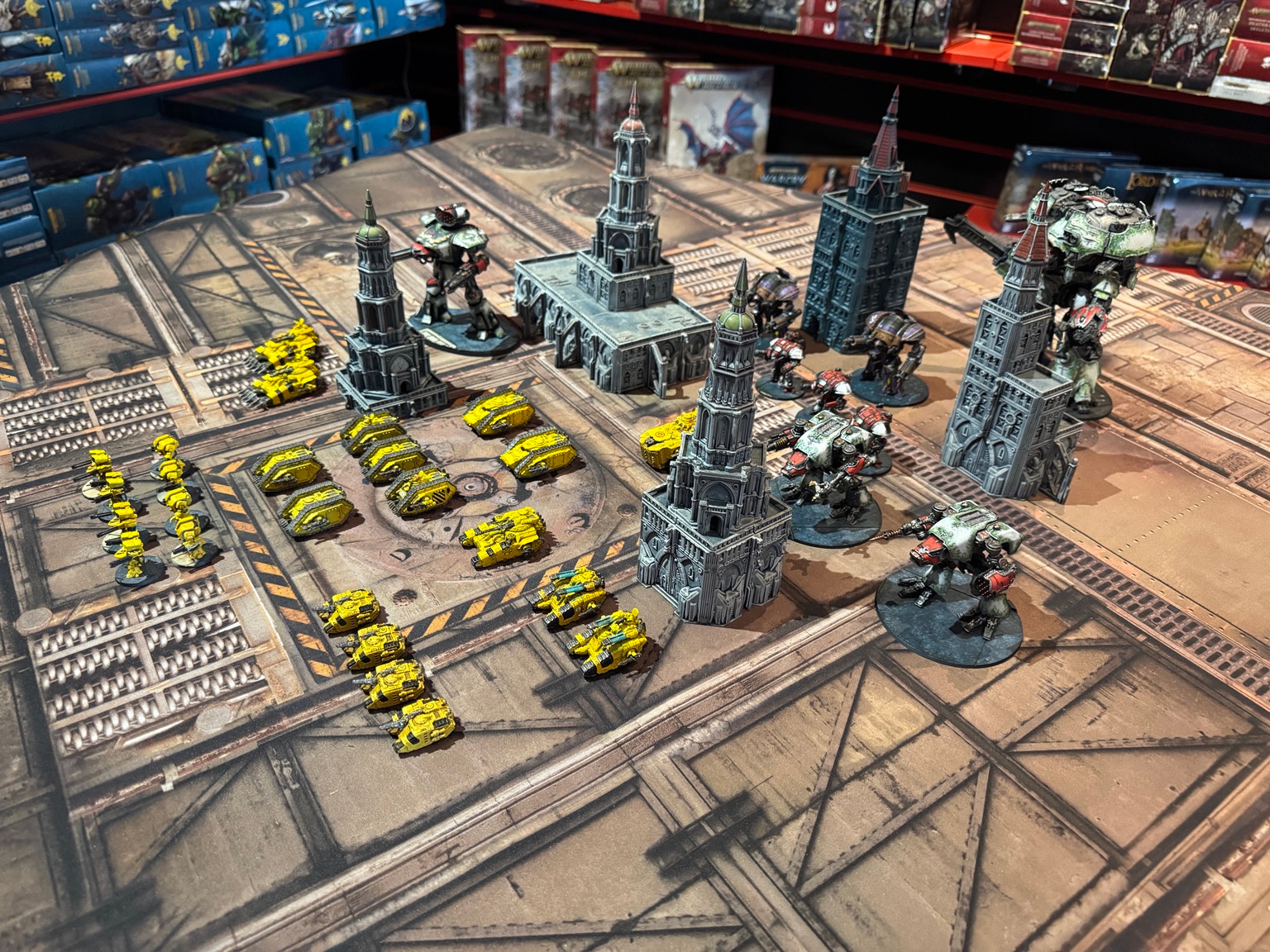
Picture a column of tanks nosing between shattered towers. Tiny infantry hug the ruins ahead. Aircraft sweep in overhead - and then a Titan steps into view, making the whole armoured column look suddenly rather small. That is the glorious trick of Legions Imperialis: little miniatures, an enormous battlefield, and a scene you cannot resist leaning down to admire.
Warhammer: The Horus Heresy - Legions Imperialis is Games Workshop’s epic-scale tabletop wargame, set during the civil war that tore humanity’s Imperium apart. You collect, build and paint an army, then take command against an opponent using dice, measured movement and a set of rules. If you are new to tabletop wargaming, think of it as making your own miniature army and discovering what happens when someone else has designs on the same battlefield.
The delight is watching that army take shape. A few infantry bases acquire some tanks. Those tanks suggest a column of transports, an artillery position or aircraft overhead. Before long, you are imagining the city they will fight through. You need not build it all at once. Let us start with what makes this scale so irresistible, then find a first force worth reaching for the clippers.
The boxed game gives you a taste of that grand spectacle: two contrasting forces, two Warhound Titans, the core rulebook and gaming accessories. There is plenty here to spark a collecting plan. Take a look, then read on to see which army catches your imagination. For army building with the current lists, allow for Liber Strategia separately.

What does epic scale mean?
In Legions Imperialis, epic scale means miniatures much smaller than those in the full-size Warhammer: The Horus Heresy game. Several infantry figures share a base, tanks gather into groups, and a building becomes one part of a cityscape. Suddenly, you have room to think in streets, squadrons and sweeping advances.
Put a handful of infantry beside a tank and the tank looks formidable. Stand a Titan behind them and your sense of scale changes all over again. This is one of the great pleasures of the collection: each new element gives its neighbours more presence. A tiny soldier can make a towering war engine look bigger than any measurement could.
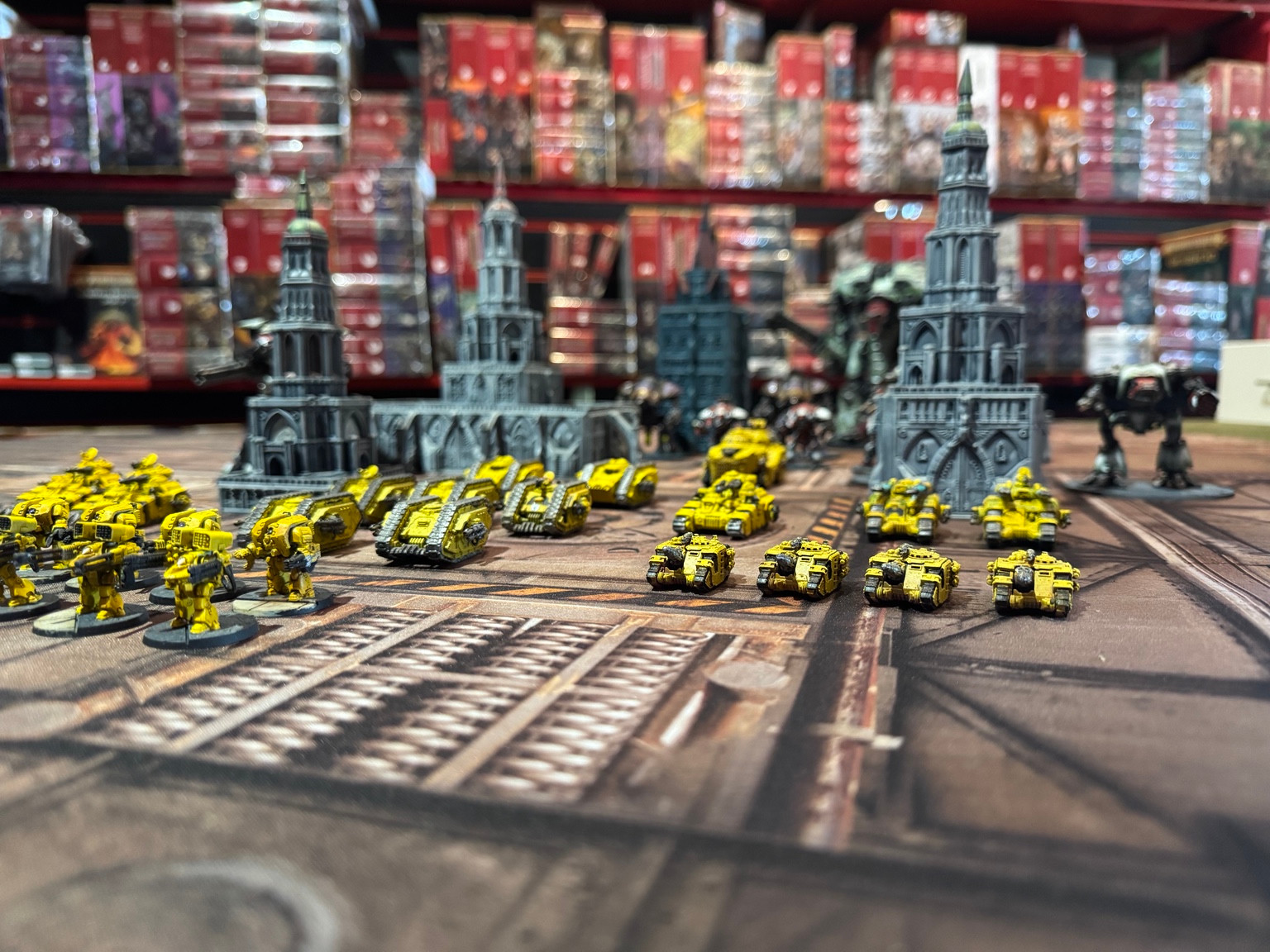
There is one useful shopping habit to learn early. The two Horus Heresy games share a setting and familiar unit names, but use separate rules and model ranges. A full-size Heresy tank cannot stand in for its epic-scale counterpart. Look for Legions Imperialis on the product, especially when a name such as Legiones Astartes or Solar Auxilia feels reassuringly familiar.
Already have some modern Adeptus Titanicus or Heresy-era Aeronautica Imperialis models? Some can join the spectacle here too. Check the relevant unit entry, weapon options and basing requirements before building a new force around those old favourites.
A little history: from Epic 40,000 to Legions Imperialis
The ambition to put a vast Warhammer battle on a tabletop has a splendid pedigree. The original Adeptus Titanicus arrived in 1988, followed by Space Marine in 1989 and a second edition in 1991. Here was a chance to look beyond a single clash and imagine whole armies beneath the feet of mighty war engines.
Epic 40,000 followed in 1997, taking the idea in a different rules direction, with Epic Armageddon arriving later. For many hobbyists, “Epic” still conjures tiny infantry, densely packed tank companies and machines that seem to have wandered out of the most extravagant battle painting. It is a powerful image - and a very good reason to get the scenery out.
Legions Imperialis carries that excitement forward with modern miniatures and its own rules. Games Workshop has identified the 1991 edition of Space Marine as an influence. Returning commanders may recognise the appeal straight away; just bring the current Legions Imperialis books to the gaming table, rather than assuming an older Epic ruleset will carry across.
The setting: a galaxy at civil war
The stage is the Horus Heresy, roughly ten thousand years before Warhammer 40,000. Humanity’s expanding Imperium is torn apart when the Warmaster Horus rebels against the Emperor. The armies built to conquer the galaxy turn their weapons upon one another.
Space Marine Legions face former brothers across the battlefield. Human armies, forge worlds, Titan Legions and Knight Households choose sides, sometimes divided by bitter loyalties of their own. Entire worlds become battlegrounds, with cities and populations caught between immense forces. This is a setting with room for all the ambition your miniature collection can muster.
Imagine your own force in that turmoil. Is it holding the last industrial district in a ruined city? Advancing to break an armoured siege? Fighting its way down streets its soldiers once defended? A few buildings and a line of painted tanks can be the beginning of a wonderfully evocative scene.
The central divide is between Loyalists and Traitors. Your allegiance helps shape the army’s identity, alongside its Legion, cohort, forge world or Household. You do not need to read a shelf of novels before choosing. Find the colours, models or story that makes you pause for a second look; there is plenty of time for the background to grow with the army.
How does Legions Imperialis play?
Once the armies are on the table, the pleasure shifts from arranging the spectacle to making it work. Infantry, armour, aircraft and war engines have different jobs. The interesting question is how to bring those jobs together when an opponent is doing their very best to spoil your plan.
Two terms will soon become familiar: Detachment and Formation. A Detachment is a group of models that acts together, such as infantry bases or a group of tanks. A Formation organises several Detachments into a larger part of your army, with compulsory choices and optional additions. Learning those requirements gives your collecting ideas a useful shape: you can see where the next handful of models will fit.
Hidden orders and alternating activations
At the start of a round, players assign orders in secret before revealing them. Will those tanks hold position to fire, advance, march or charge? Orders commit your Detachments to their actions, so the decisions begin before the first model moves. Across the table, your opponent is making plans of their own.
Players then take turns activating Detachments during movement and combat. Which unit needs to act first? Moving one Detachment may open an opportunity, protect another or force the enemy to rethink an advance. Even a small part of the army can give you an absorbing decision.
That is where the tension comes from. You have a plan, but you cannot put the whole battlefield on pause while you carry it out. Watching an opponent reveal an unexpected intention is part of the fun; finding a response with the models you have left to act is another.
Think about the mission
It is easy to become distracted by the largest enemy war engine. Understandable, really - it is making quite an entrance. Keep an eye on the mission, though. It tells you how victory is scored, and the objectives and positions that matter deserve as much thought as an inviting target.
For your first games, give each part of the army a simple job. Which units will contest an objective? How will they get there, and what will protect them? Asking “What is this Detachment here to do?” makes an army easier to understand and gives you something useful to reflect on after the dice have stopped rolling.
The battlefield gets a say as well. Roads, ruins and buildings such as Civitas Imperialis terrain shape movement and lines of sight. Discuss the terrain with your opponent before you begin, then enjoy the way a few towers turn an open table into somewhere worth fighting over.
Which Legions Imperialis army should you choose?
Now for a particularly enjoyable decision: whose army will you build? There are six main army lists to explore. The introductions below offer a taste of each, with plenty of room for future guides to their units, formations and collecting possibilities. You may find yourself drawn to more than one. That is what notebooks are for.
Legiones Astartes
Power-armoured infantry, Dreadnoughts, tanks, transports and aircraft: the Space Marine Legions bring a thoroughly tempting cross-section of the Heresy to your workbench. Shared equipment provides a broad foundation, while Legion colour schemes, background and special rules give each force its own character.
If you picture a coordinated assault with recognisable Heresy machines rolling forward together, start here. Choosing a Legion also gives you a lovely hobby question: which colours would you enjoy seeing across an entire armoured column? Pick a story and scheme you will be happy to return to, one finished unit at a time.
Solar Auxilia
The Solar Auxilia put highly trained human soldiers amid substantial armoured forces. Infantry, battle tanks and super-heavy vehicles create the look of a disciplined military expedition. Place those little troops beside their armour and the scale of the war becomes wonderfully apparent.
If neat ranks of infantry and rows of armoured vehicles are your idea of a good afternoon at the painting desk, the Solar Auxilia deserve a close look. Learn their command arrangements early as you get to grips with the game, so the army you have so carefully assembled can carry out the plan you have in mind.
Mechanicum Taghmata
For machinery with a stranger character, turn to the Mechanicum. Augmented soldiers, battle-automata and unusual war machines mingle technology with ritual. On the hobby desk, that means a tempting mixture of metallic finishes, forge-world colours and industrial bases. A collection can feel like a procession marching straight out of a vast manufactorum.
Mechanicum Taghmata can fight on either side of the civil war, giving you a choice of allegiance for those creations. There is an important distinction to keep in mind: choosing Traitor allegiance does not automatically turn a Taghmata force into a Dark Mechanicum army.
Dark Mechanicum
The Dark Mechanicum takes the machine cult’s ambitions somewhere altogether more sinister. Its unsettling constructs, including Stalker war engines, give the army a striking silhouette. If conventional tank columns leave you wondering what might be lurking behind them, this could be your invitation to investigate.
There is rich collecting appeal here for anyone drawn to the stranger side of the Heresy. Give the current army list a careful look while planning: these distinctive machines bring their own army-building considerations. Let the models fire your imagination, then use the list to turn that idea into a force.
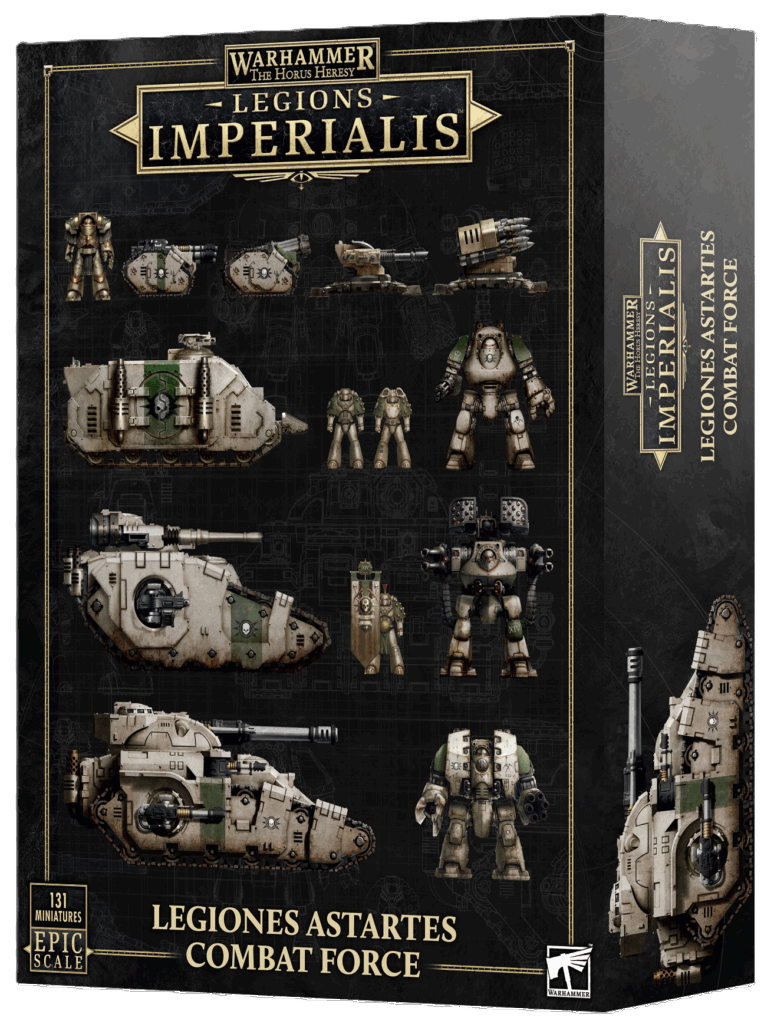
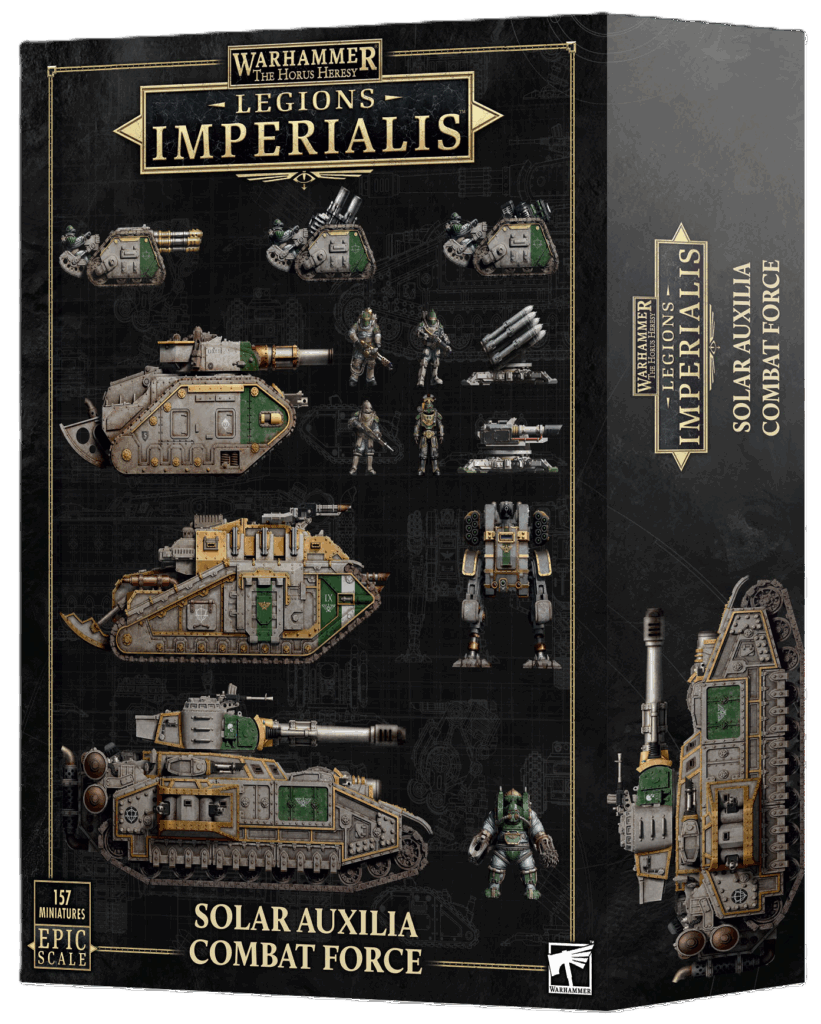
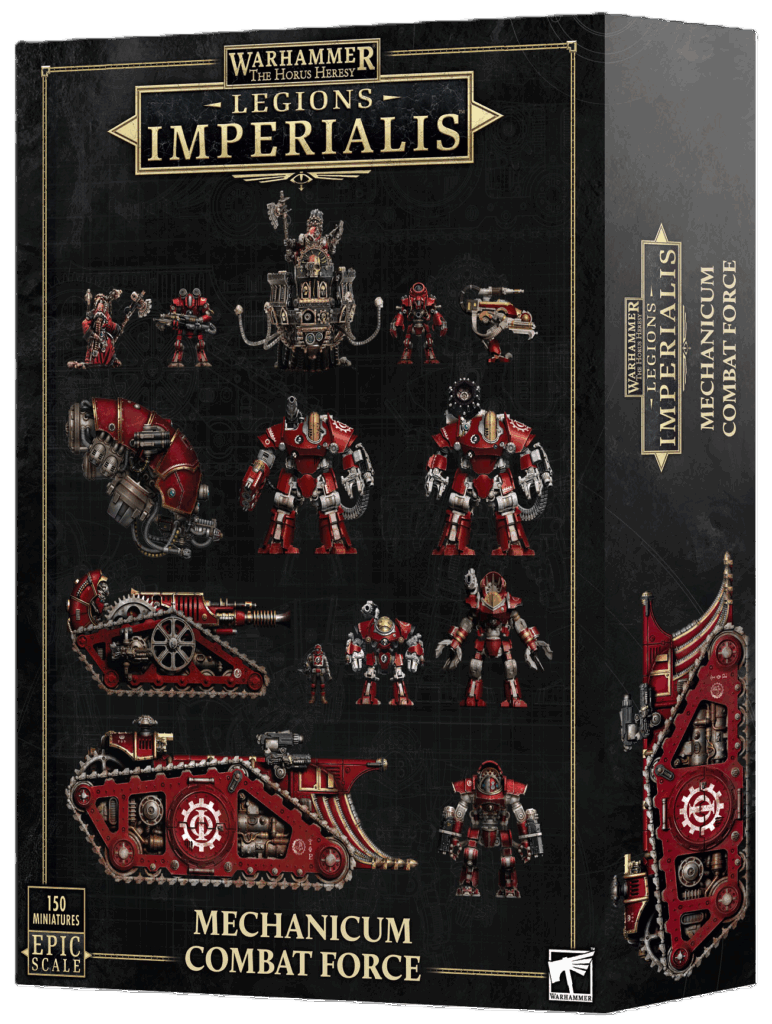
These three epic-scale Combat Forces offer different starting collections to consider. Compare the contents with your chosen Formation and the models you most want to build; the product pages show current availability. The best starting point is the one that suits your plan and makes you keen to begin.
Epic-scale Combat Forces
-

Legiones Astartes: Combat Force
£86.95 -

Solar Auxilia: Combat Force
£86.95 -

Mechanicum: Combat Force
£86.95
Collegia Titanica
And then there are the Titans. These vast god-engines dominate the skyline and give a painter room for bold heraldry, weathered armour and elaborate bases. Even among small miniatures, they make magnificent centrepieces. Put one between a pair of towers and it is difficult not to start imagining the ground shaking.
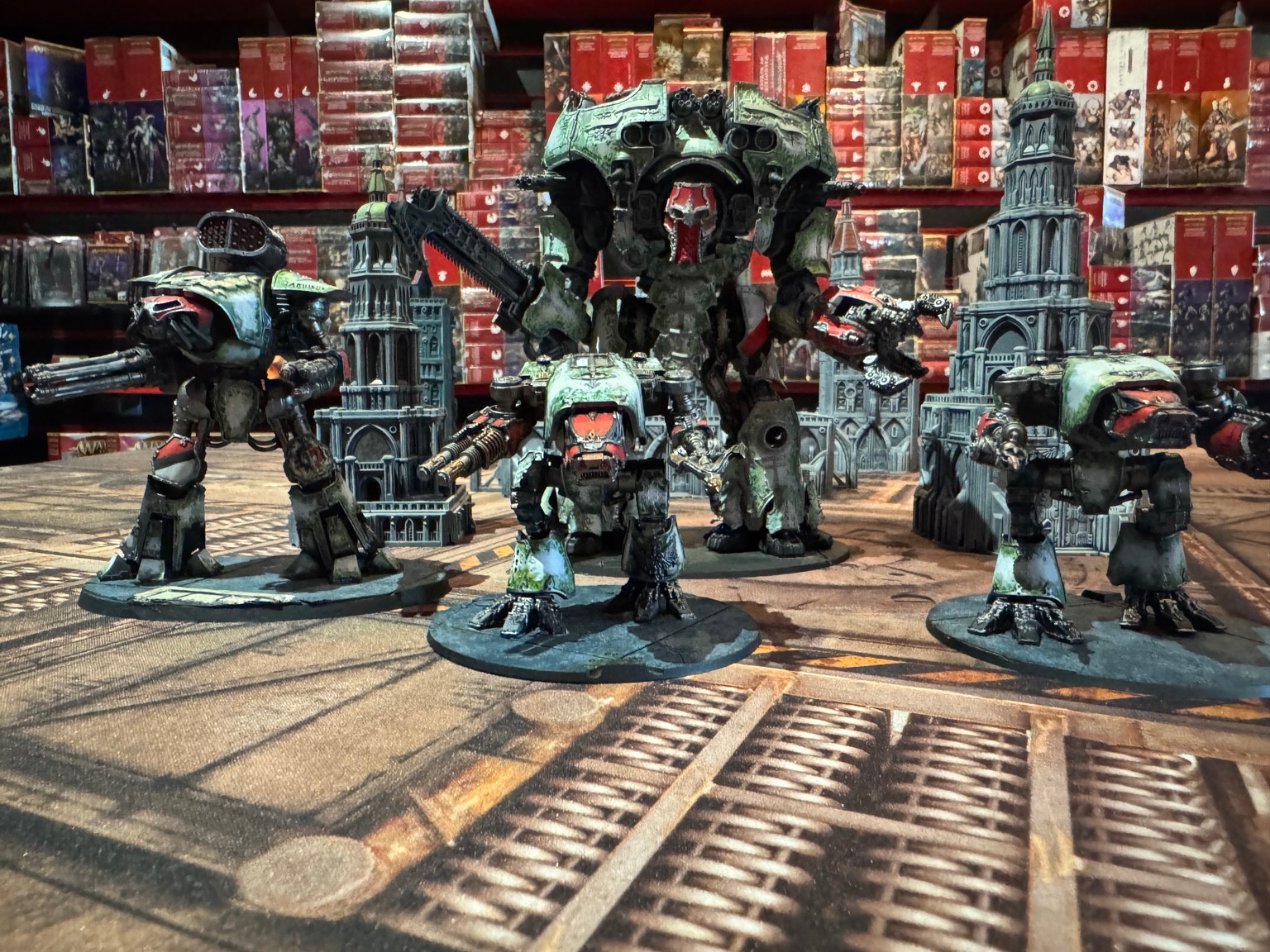
The Collegia Titanica has its own army list, and Titans can also appear alongside other forces where the current rules permit. If these giants are the heart of your collecting idea, plan for the mission and supporting elements too. There is more to commanding a Titan force than choosing which impressive silhouette you want on the shelf - although that is an excellent part of the fun.
Knight Households
Knight Households bring heraldic war engines, noble-house imagery, enormous guns and close-combat weapons together in one very appealing package. A group striding between buildings makes a fine scene, with each model offering a little canvas for the identity of its Household.
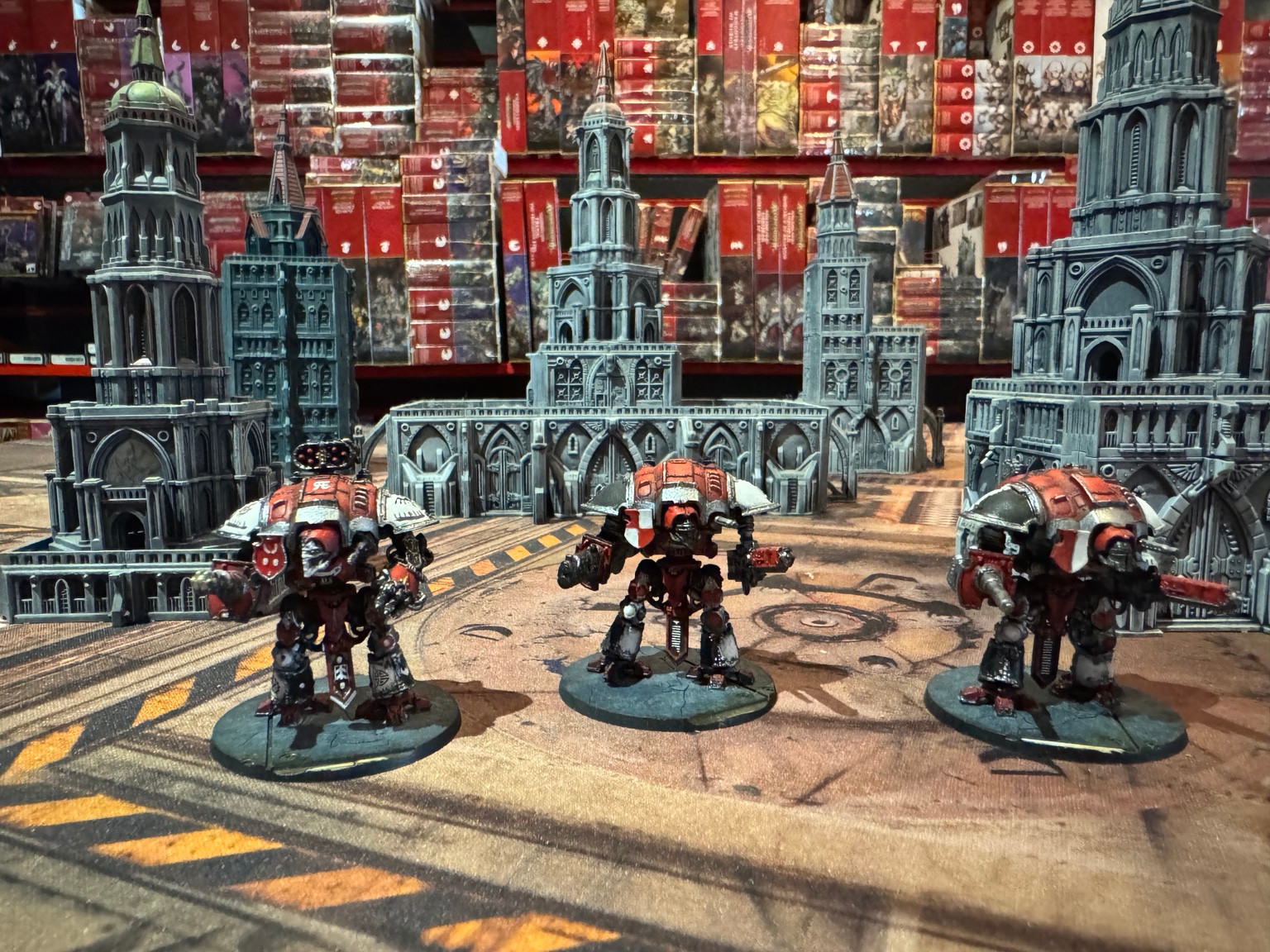
Knights have dedicated army-building options of their own. Their colourful armour gives you plenty to enjoy while collecting, from a shared scheme to the details that distinguish one machine from the next. Check your chosen Formation before settling on its core boxes, then start thinking about those colours.
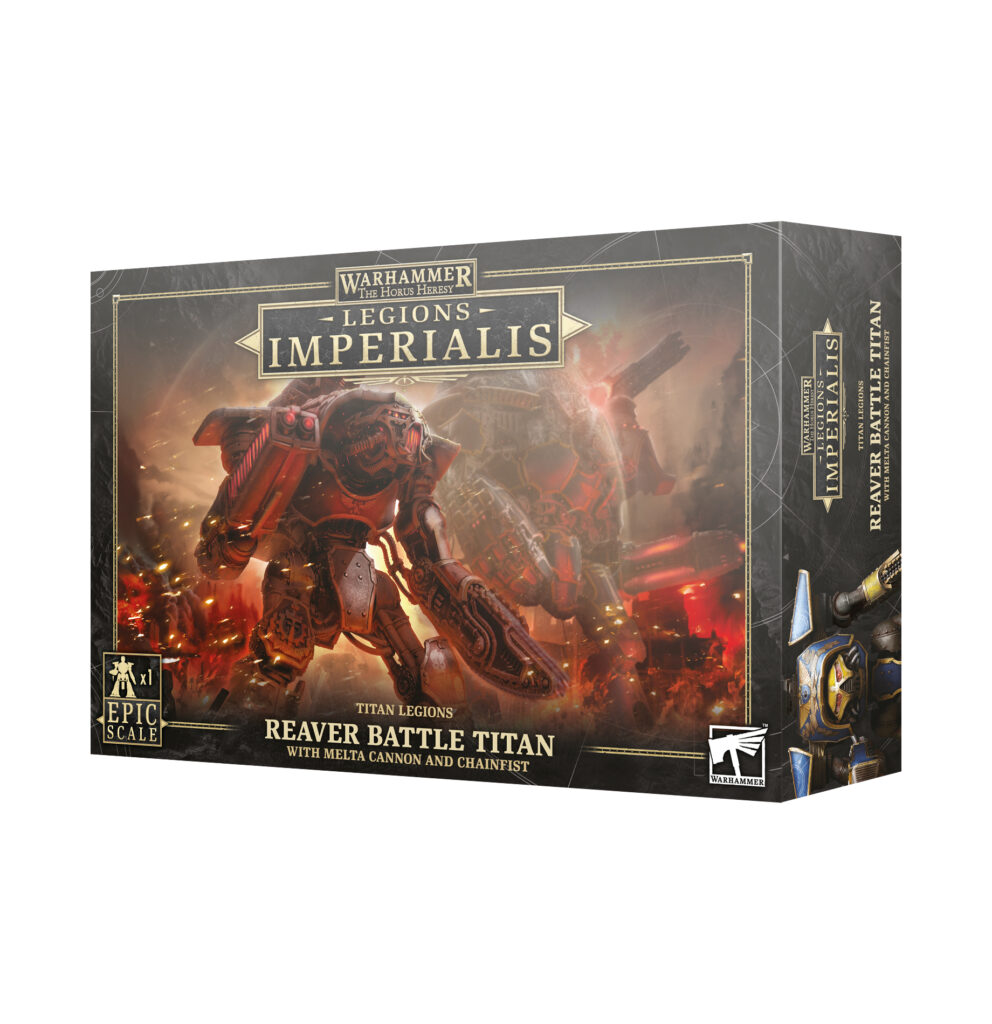
The epic-scale Acastus Knights Porphyrion and Reaver Battle Titan give you two very different sizes of war engine to admire. Picture them alongside the rest of your collection, then check their current unit entries and your Formation or allied options to see how they fit into the force.
Knights and Titans at epic scale

What do you need to start?
The right rules
Before the first advance, give yourself the right books. The Legions Imperialis core rulebook explains how to play. For army building, Liber Strategia collects and updates the six main army lists, superseding their earlier versions in the core book, The Great Slaughter, The Devastation of Tallarn and Rise of the Dark Mechanicum. Keep it alongside the core rulebook: it is a companion, rather than a replacement.
Use both with the current official FAQ, errata and Liber Addenda. Other publications can provide rules for particular units or campaigns, so check what your chosen models need. You do not have to assemble a complete library before learning the game; begin with the books relevant to your first force.
Miniatures and gaming essentials
Choose an army that excites you, then sketch a manageable opening force around its Formation requirements. This is the pleasant meeting point between daydreaming and planning. A boxed collection may provide a useful foundation, but compare its contents with your list and check whether books, dice and accessories are included before buying.
The Legions Imperialis boxed game brings together Legiones Astartes, Solar Auxilia and two Warhound Titans, plus the core rulebook, dice and tokens. Allow for Liber Strategia separately for the current army lists. Already settled on a favourite army? Compare the epic-scale Legiones Astartes Combat Force, Solar Auxilia Combat Force and Mechanicum Combat Force with your plan. These are model collections; the core books and gaming accessories are separate.
For the table, gather dice, a tape measure marked in inches, the relevant markers and templates, suitable terrain and a playing area appropriate to your mission. For the workbench, you will want clippers, glue and brushes from the hobby tools range, plus your chosen paints. Starting from scratch is perfectly fine: our guide to essential hobby supplies walks through the basics, leaving you free to concentrate on the much more enjoyable business of choosing an army colour.
Learning with a friend? Keep the first game manageable and give yourselves room to look things up. The official Quick Start Guide offers an introductory mission with special arrangements for the original boxed game’s contents. It still requires the core rulebook, and that teaching setup should not be treated as standard army-building permission. A modest first outing gives you both a chance to discover what your models can do.
A quick starting-point check
| If you are thinking… | Start here |
|---|---|
| “I want Space Marines and a mix of units.” | Explore Legiones Astartes and choose a Legion. |
| “I love tank columns and human armies.” | Look at Solar Auxilia infantry and armour. |
| “I want unusual machines.” | Compare Mechanicum Taghmata and Dark Mechanicum. |
| “The giant walkers are the attraction.” | Read the Titan or Knight army-building options before buying. |
| “I already own epic-scale models.” | Check current unit entries, equipment and bases first. |
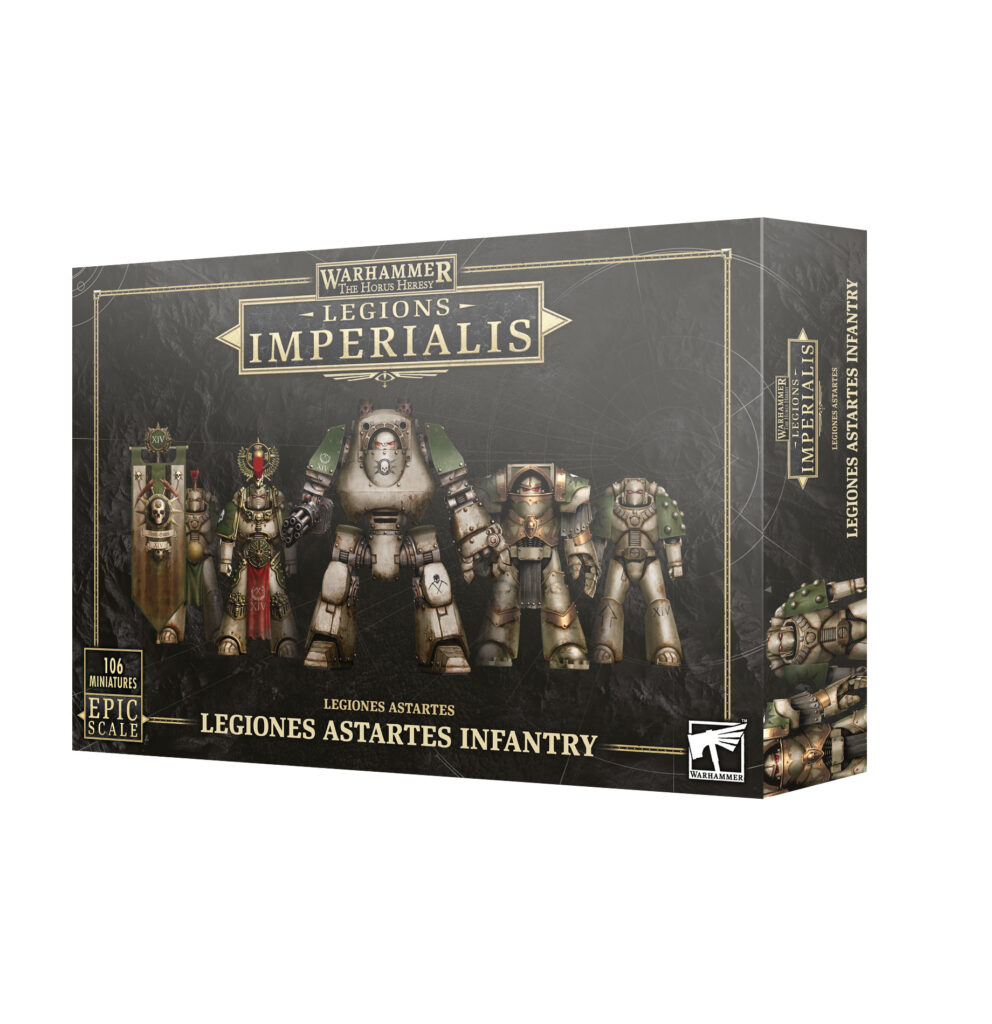
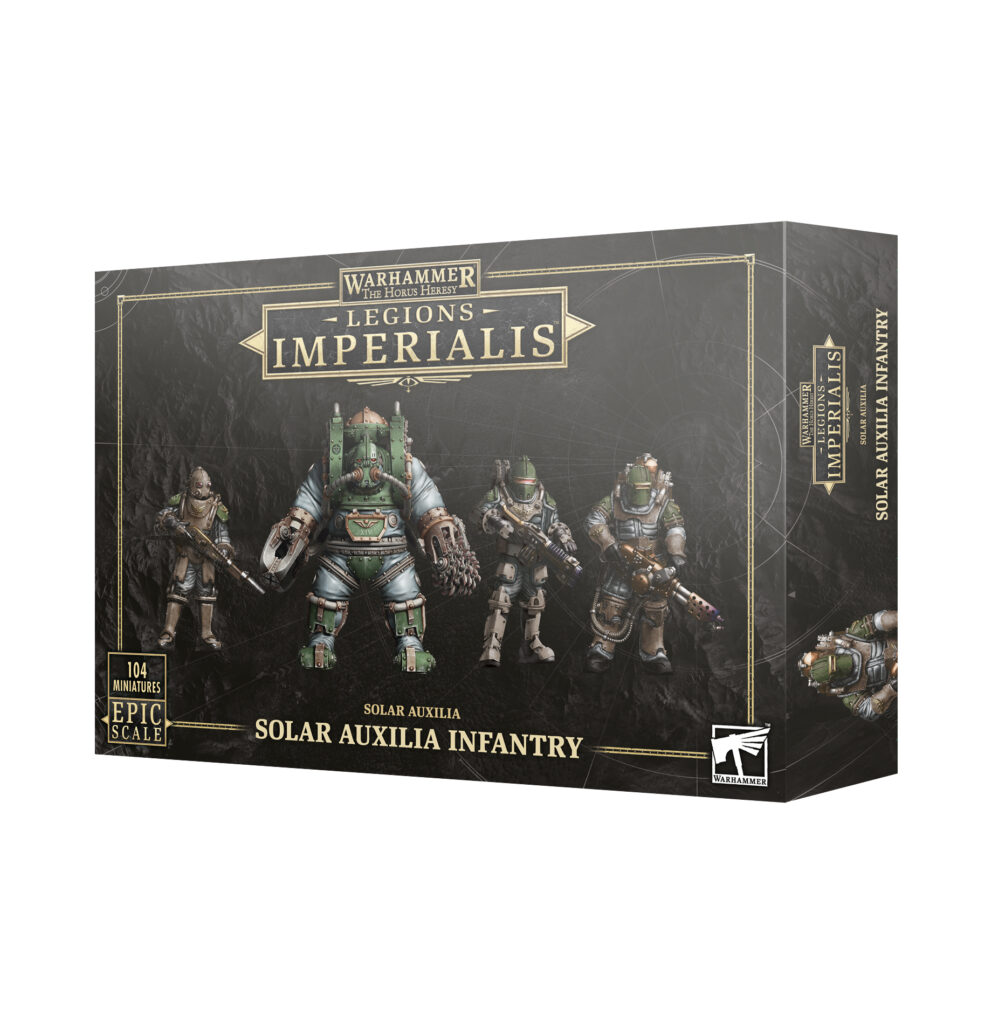
There is also a great deal of satisfaction in growing a force one Detachment at a time. Infantry and tank squadrons let you tackle a manageable batch, finish it and see the army grow. Compare these epic-scale Legions Imperialis kits with your plan; they are the small-scale models, rather than their full-size counterparts.
Classic infantry and tank squadrons


Building and painting at epic scale
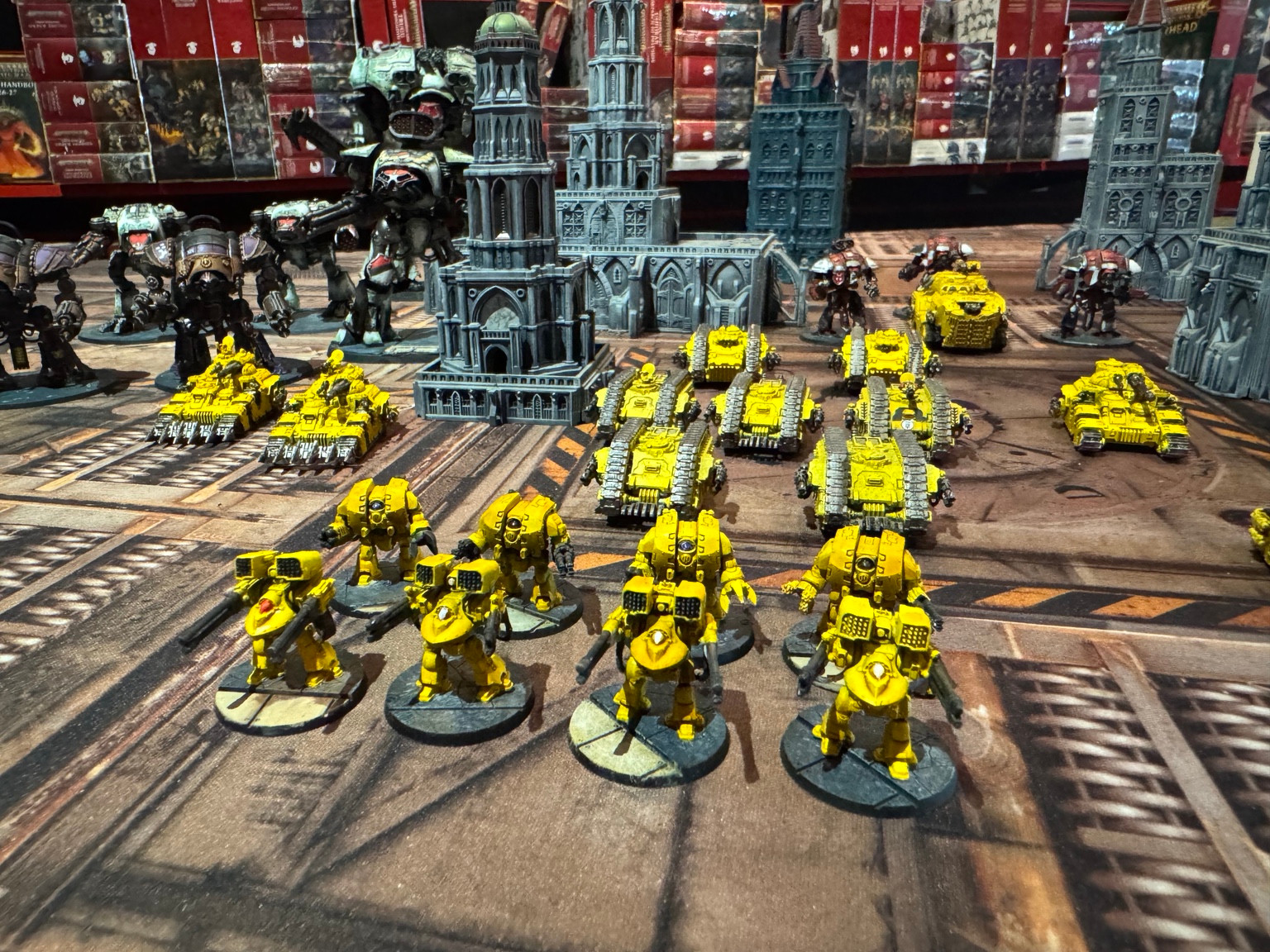
At first glance, those little figures can make a paintbrush feel rather large. Take heart: you do not need to pick out every detail individually for an army to look convincing on the table. Strong colour choices and consistent bases can do a remarkable amount of work. The reward comes when you step back and see the whole force together.
Begin with a small test batch. Lay down the main armour colour, pick out weapons or prominent details, then try shading or careful drybrushing to bring out the sculpt. Set the models on the table and judge them from a normal viewing distance. A clear helmet colour or a neatly painted weapon may tell the eye everything it needs. Those tiny eyes can wait.
Give yourself an easy time with assembly, too. Depending on your preferred method, infantry may be simpler to paint before their final attachment to a base. Read the instructions and try a few models before committing the whole batch. Small parts reward a gentle hand; our guide to removing miniatures from sprues is useful preparation before the clippers come out.
Tanks and larger engines bring their own treats: a squadron marking repeated across the armour, dusty tracks, a chipped panel or a banner that gives a machine its identity. Keep basing materials appropriately fine, so rubble looks convincing beside your troops. Our beginner’s guide to scenic bases offers ideas you can adapt to this smaller scale. Even a restrained base can help place a whole unit in the same battered landscape.
Build in stages and enjoy each finished Detachment. Line it up, take a photograph and see how it looks beside the last one. That moment is worth savouring. Epic-scale tanks do make “just one more squadron” sound terribly reasonable, but finishing a batch before opening the next keeps the collection moving - and leaves you with something ready for the table.
Your first steps into the Age of Darkness
This is the lasting appeal of Legions Imperialis: you can stand back and see an army crossing a city, then lean in to admire the little details you painted yourself. The same collection offers the pleasure of a finished model, the spectacle of a battlefield and the decisions of a game shared with an opponent.
You do not need the entire vision on day one. Choose a force you love, check the current rules and make a start you can finish. Paint those first bases. Give the tanks their markings. Arrange a few buildings and see what happens when the army takes its place among them. The vast battle in your imagination begins with a very small handful of models.
When you are ready to choose that first project, explore Bomran’s Legions Imperialis range. Follow the army that caught your eye, make room on the workbench and begin with one Detachment. Somewhere between the first coat of paint and the first roll of the dice, that imagined battlefield starts becoming yours.