

Middle-earth RPG adventures
Imagine telling your fellowship that Saruman would like a word. Watch the faces. Someone will grin. Someone will immediately distrust him. Someone, wonderfully, will want to hear him out.
That last player has the right idea. Before his betrayal, the White Wizard has learning, authority and a place among the great opponents of the Shadow. A company could have excellent reasons to serve him. Knowing where Tolkien’s story leads makes the invitation more tantalising: how close would your heroes get, what would they excuse, and when would they finally say no?
Hands of the White Wizard and Trials of Saruman put that relationship within reach of your own table. Choose Hands for The One Ring second edition, or Trials for The Lord of the Rings Roleplaying 5E. They are counterpart adventure collections for different rules systems. Once you have the right one, the really interesting questions can begin.
First, find your fellowship’s book
| Your group plays | Choose | Check before buying |
|---|---|---|
| The One Ring, second edition | Hands of the White Wizard | You have The One Ring Core Rules |
| The Lord of the Rings Roleplaying 5E | Trials of Saruman | You have the matching Middle-earth core rules and the underlying 5E rules they use |
| Ordinary Dungeons & Dragons only | Choose your Middle-earth rules first | Trials uses Free League’s Middle-earth adaptation, with its own rules and character options |
| An older Middle-earth RPG | Check the exact edition first | A familiar setting does not make the game statistics interchangeable |
Choose the book for your rules system
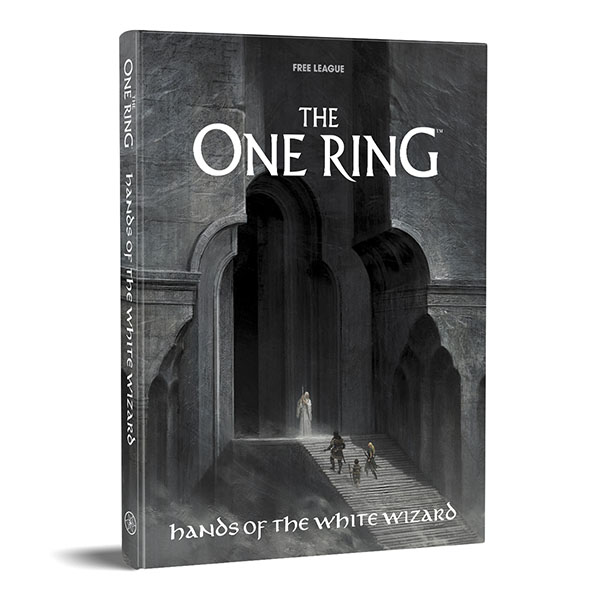
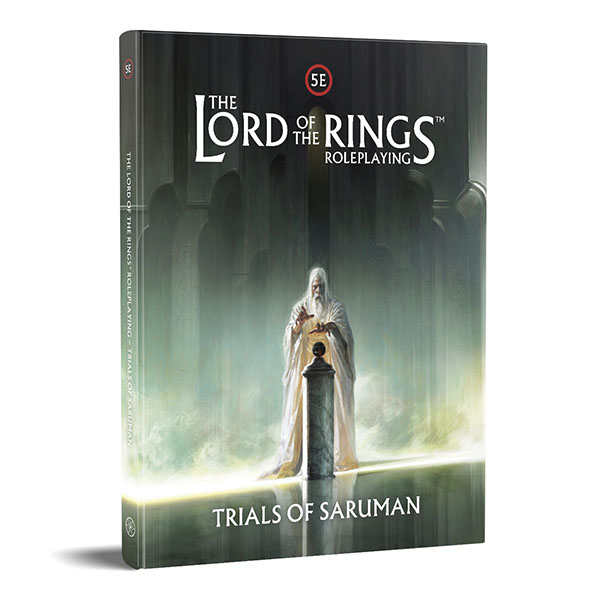
Buying for another Loremaster? A photograph of their core rulebook will settle the choice. It also leaves you free to enjoy giving someone a thoroughly suspicious wizard for their birthday.
The pleasure of getting too close to Saruman
Each collection contains six adventures, spanning 2965 of the Third Age to the opening moves of the War of the Ring. You can use them individually or link them into a larger tale, with the heroes serving Saruman or keeping watch on him before his betrayal. That is a generous stretch of Middle-earth’s history in which to let a relationship grow.
For Tolkien fans, there is something irresistible about approaching a familiar figure from an unfamiliar position. Your heroes might need his knowledge. They might respect his purpose. They might be proud that someone so important has noticed them at all. Give that admiration a little room, and the doubts have somewhere to take root.
Picture a possible conversation after an audience. One hero thinks the wizard has been perfectly reasonable. Another wants to know why his request was phrased quite so carefully. A third agrees with the task but worries about the people it could affect. The players are leaning forward, making their case, perhaps looking for support from the quietest person at the table. This is the sort of roleplaying possibility that makes the premise so inviting.
Saruman can hold a group’s attention because he is worth listening to. A patron with nothing to offer beyond obvious menace is easy to refuse. Someone whose help matters is a much more difficult proposition. For a Loremaster, imagining how to make that authority persuasive is half the fun already. Our guide to creating an immersive tabletop RPG experience offers more ideas for memorable NPCs and meaningful player choices.
The two books offer counterpart treatments of this premise, rather than successive chapters. One is enough for a group playing one system; buying both will not produce twelve consecutive adventures. Running both games, or collecting both ranges, is a different matter. Each version presents its challenges through its own rules.
Bring the game your company loves
Hands of the White Wizard: for The One Ring second edition
If your company already plays The One Ring second edition, Hands is the natural fit. Its adventures belong with the journeys, councils, combat and Shadow of your existing game. You can spend your preparation thinking about what Saruman means to these particular heroes, with their accumulated loyalties and anxieties, rather than converting rules.
Coming to Middle-earth afresh? The One Ring is built specifically for Tolkien’s world. Give your fellowship time to discover itself: who speaks when an audience becomes awkward, who keeps everyone going on the road, who believes a stranger deserves another chance. Those little habits are fertile ground for a campaign about trust. The White Wizard becomes considerably more interesting when the people answering his invitation already matter to one another.
Our guide to fantasy role-playing games can help if you are still choosing the kind of game you want around your table.
Trials of Saruman: for The Lord of the Rings Roleplaying 5E
Trials is the choice for Free League’s The Lord of the Rings Roleplaying 5E. For players who know fifth edition, that offers familiar foundations for venturing into Middle-earth together.
There is plenty of pleasure in discovering what changes. Heroic cultures and callings, journeys, councils and corruption give the adaptation its own character; magic calls for subtler expectations than many D&D parties bring along. Agree on character options before anyone becomes too attached to importing their favourite spellcaster. Let the group discover what heroism feels like here.
Already using this Middle-earth adaptation? You have made the important choice. Trials lets you follow the Saruman premise in the game you know. Ordinary D&D rules alone, or an older Middle-earth game, do not provide the same ready match.
A little preparation before the invitation
Both collections are adventure supplements. Hands needs The One Ring second-edition Core Rules. Trials needs The Lord of the Rings Roleplaying core rules; the current, original 5E core also relies on access to the underlying fifth-edition rules.
Plan around the full matching core book, even if a starter set first drew you in. You need not assemble a mountain of regional supplements before the company sets off: check your chosen adventure’s references and add material where it helps. For a first group, our guide to getting started with RPGs at home covers the practical groundwork.
A note on the forthcoming core books
Checked on 8 October 2026: Free League has announced revised core books, with shipping estimated for October 2027. The revised The Lord of the Rings Roleplaying core is planned to be standalone and updated for 5.5 rules. The publisher says existing expansions remain compatible with the revised core of their respective game. The forthcoming standalone core is not the current 5E book; Hands remains for The One Ring, and Trials for The Lord of the Rings Roleplaying.
Let the relationship grow
A linked campaign gives you the delicious prospect of returning to someone the fellowship no longer sees quite the same way. Consider keeping a few lines after each visit to Isengard: what was asked, what the heroes agreed to, whose trust shifted. Imagine looking back at an early note months later and finding a promise the company once made without hesitation. Those are lovely opportunities to build towards.
The adventures’ historical span also leaves room for time to pass between episodes. Let your heroes have lives beyond the immediate commission. An opinion can harden; a responsibility can grow. A later invitation might reach a fellowship with very different reasons for accepting it.
For an existing campaign, an individual adventure offers a way to bring Saruman into the company’s orbit. Read its requirements and connections, then choose an entry point that suits their travels and capabilities. He need not take over the whole campaign to leave an impression.
And if your group wants a shorter commitment, the adventures can be played separately. Just resist promising a one-evening finish before reading your choice. “Standalone adventure” does not mean “one-shot”, especially with a company capable of spending a happy hour arguing over whether to trust a wizard.
What if your heroes believe in him?
Here is a conversation worth having before play: how does everyone feel about knowing Saruman’s future? Some groups will relish the ache of watching a tragedy approach. Others will immediately ask whether they can change it. The premise allows you to question his fate, without promising that rescuing him from corruption will be easy.
Agree on that freedom together, while the kettle is on. Then ask each player why their hero would accept the invitation. Knowledge they hope to gain? Someone they want to protect? A cause that seems to need the wizard’s help? These are possibilities to explore as a group, rather than supplied scenario details. A personal reason gives the hero something to weigh when doubt arrives.
Keep the adventure secrets with the Loremaster. Players can know the broad promise: a powerful patron, uneasy loyalties and choices whose meaning may change with time. Leave them room to surprise one another.
Who will answer the White Wizard?
Hands of the White Wizard belongs with The One Ring second edition; Trials of Saruman belongs with The Lord of the Rings Roleplaying 5E. Match the core rules, choose one collection for your system, and you have six adventures through which to explore that invitation.
The prospect lingers because it is so easy to imagine your own players in it. The friend who always gives people another chance. The one who notices every evasive answer. The usually cautious player who might, just this once, find the wizard convincing. Put their heroes in Saruman’s company and give them reasons to care. Who trusts him, who challenges him, and who still hopes for him could become a very personal part of your Middle-earth.
Both books are part of Bomran’s Other Role-Playing Games collection.