




If you’ve ever dreamed of embarking on thrilling adventures, battling mythical creatures, and forging bonds, then welcome to the wonderful world of Dungeons & Dragons (D&D). Whether you’re a curious newbie or someone who’s been intrigued by this legendary tabletop game, you’re in for an unforgettable journey.
Here at Bomran, we’re passionate about all things creative, adventurous and collaborative. We offer tools and resources to bring imaginations to life and we’re thrilled to guide you through your first steps into the realm of D&D. With our help, you’ll discover the joy of crafting characters, exploring fantastical worlds and sharing laughs with friends. Don’t worry if it all feels a bit overwhelming, every hero starts somewhere! Ready to dive into epic storytelling and endless possibilities? Let’s get started.
What is Dungeons & Dragons and how do you play it?
Dungeons & Dragons is a tabletop role-playing game (TTRPG) that invites players to embark on fantastical adventures set in worlds limited only by their imaginations. Players create characters with unique abilities and personalities who work together to overcome challenges, solve mysteries and achieve their goals. At the heart of D&D is collaborative storytelling, making it as much about creativity and interaction as it is about dice rolls and strategy.
The game unfolds through a blend of roleplaying, decision-making and chance, where the roll of a dice can determine success or failure in critical moments. Each session becomes a unique blend of suspense, laughter and excitement as players navigate a world brought to life by their Dungeon Master. Whether you’re slaying dragons or negotiating peace with a rival kingdom, D&D offers limitless opportunities to craft unforgettable stories.
The Basics of Gameplay
At its core, D&D is a collaborative game where players and the Dungeon Master (DM) come together to create and navigate thrilling adventures. Whether you’re exploring ancient ruins, fighting mythical beasts or solving mysteries in a magical city, the game thrives on imagination and teamwork. Understanding the basics of gameplay will help you unlock the full potential of this legendary tabletop experience.
The Dungeon Master (DM)
The Dungeon Master is the guiding force behind every D&D adventure. Acting as the storyteller and referee, they describe the setting, narrate events, and manage non-player characters (NPCs) that the players encounter. The DM also ensures that the game flows smoothly, balancing challenge and fairness while improvising based on the players’ choices. A skilled DM brings the world to life, making each session dynamic and engaging. Whether you’re battling a ferocious dragon or negotiating with a cunning merchant, the DM’s creativity shapes the story.
Read our blog post How to Host a Successful DnD Game Night: Tips for Dungeon Masters to find out how to become the best DM possible!
Player Characters (PCs)
As a player, your primary role is to create and embody a unique character, also known as a player character (PC). You’ll select a race (like humans, elves, or tieflings) and a class (like rogue, cleric, or barbarian) to define your character’s abilities and strengths. Beyond the mechanics, you’ll craft a backstory, personality and motivations to give your character depth and life. The PCs work together to overcome obstacles and achieve shared goals, forming the heart of the game’s narrative. Your choices and actions determine how the story unfolds, making every session unpredictable and exciting.
Dice & Rules
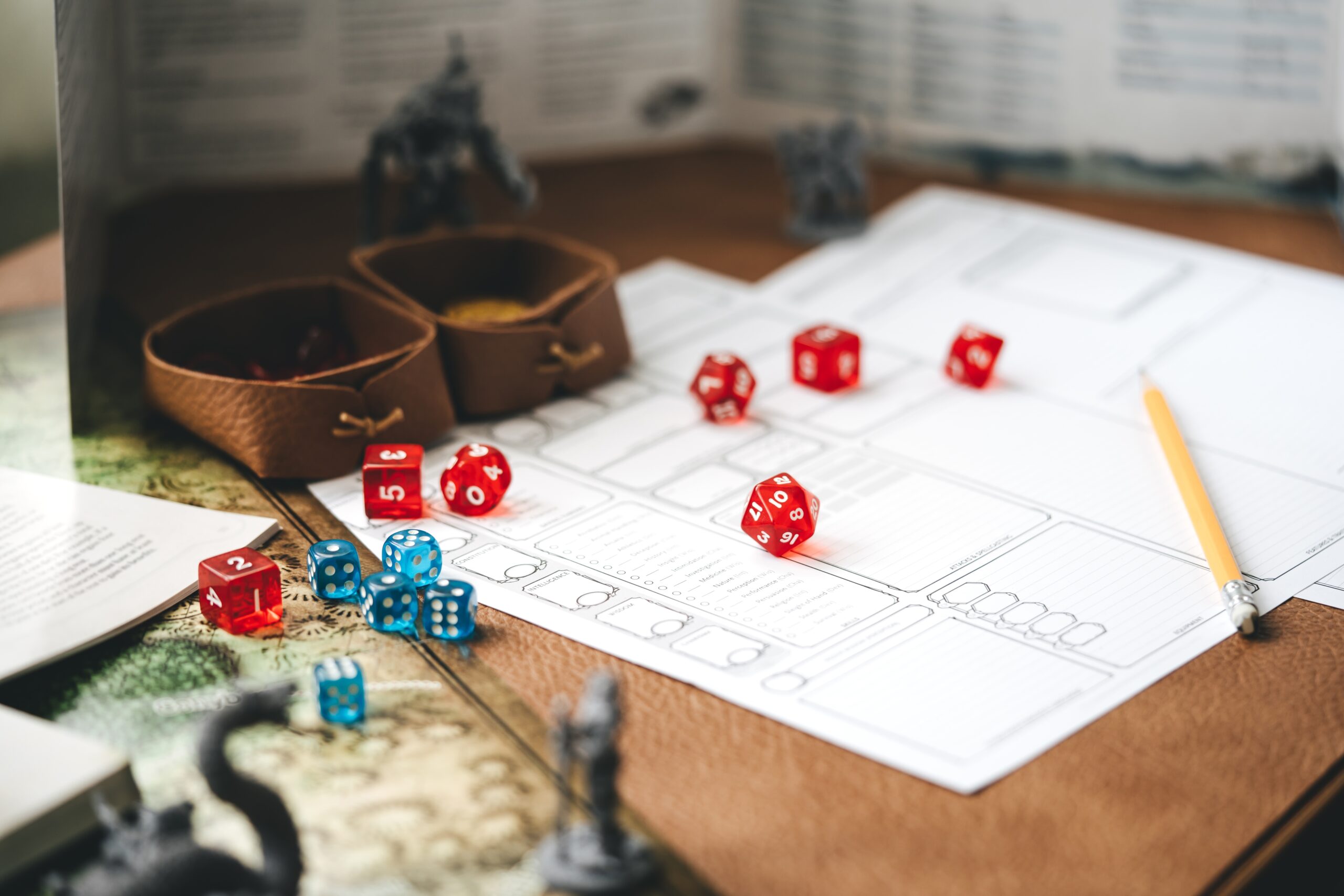
D&D gameplay revolves around polyhedral dice, which come in various shapes and sizes (d20, d12, d10, etc.). The most iconic is the 20-sided die (d20), used to determine success or failure for actions like attacking, sneaking, or persuading an NPC. The rules, primarily found in the Player’s Handbook, provide a framework for everything from combat mechanics to spellcasting. However, these rules are more guidelines than rigid requirements, allowing flexibility to suit each group’s playstyle. Rolling dice adds an element of chance, ensuring that even the best-laid plans can take unexpected turns.
For more information about D&D dice, read our blog post Understanding DnD Dice: What Each Die Means and How to Use Them.
Role-Playing
One of the most immersive aspects of D&D is role-playing. As your character, you’ll make decisions, engage in dialogue, and react to challenges in ways that align with their personality and motivations. Whether you’re a fearsome warrior or a mischievous bard, role-playing allows you to explore different perspectives and create memorable moments. Interactions between characters, both with NPCs and other players, often lead to some of the most entertaining and heartfelt moments in the game. The more you invest in role-playing, the richer your D&D experience becomes.
The Magic of Flexibility
What makes D&D truly special is its adaptability. Some groups focus on epic combat, crafting intricate battle strategies and facing off against legendary foes. Others may lean towards exploration, unearthing hidden treasures and discovering ancient lore. Still, others revel in storytelling, weaving complex character arcs and emotional narratives. No matter your preferences, D&D offers a framework that can be tailored to your group’s interests, making every campaign a unique adventure.
Dungeons & Dragons is a game that grows with you, evolving as you and your group develop your playstyle. By understanding these basics of gameplay, you’re ready to dive into a world of endless possibilities. All that’s left to do is gather your dice, grab your character sheet, and let the adventure begin!
Getting Started with Your First Campaign
Embarking on your first D&D campaign can feel like stepping into the unknown, but it’s a journey filled with excitement, creativity, and camaraderie. With a bit of preparation and a willingness to embrace the unexpected, you’ll be well on your way to forging unforgettable memories. Here’s a step-by-step guide to ensure your first campaign is a success.
Step 1: Gather Your Adventuring Party
The first step is to assemble your group of players, typically between three to six people, with one person stepping into the critical role of the Dungeon Master (DM). The DM not only guides the story but also manages the world, NPCs and gameplay mechanics. If no one feels ready to take on this responsibility, consider rotating the DM role or starting with pre-written guides designed for beginners.
Beyond filling the DM role, it’s essential to find players who share a common interest in the game’s style – whether it’s intense combat, problem-solving, or immersive storytelling. Communication is key to setting expectations and ensuring everyone has a great time. Finally, establish a schedule that works for everyone, as consistency helps keep the campaign running smoothly.
Step 2: Get the Essentials
To play D&D, you’ll need a few key materials to get started.
- The Rulebooks
At a minimum, the Player’s Handbook is essential for understanding gameplay mechanics and creating characters. The DM may also benefit from the Dungeon Master’s Guide and Monster Manual for running encounters and designing adventures.
- Character Sheets
These are vital for tracking your character’s stats, abilities, and inventory. You can find free printable sheets online or use digital tools like D&D Beyond.
- Dice
A standard set of polyhedral dice includes a d4, d6, d8, d10, d12, and d20. Each serves a unique purpose in gameplay, with the d20 being the most frequently used.
- Adventure Module (Optional)
Pre-written campaigns, like The Lost Mine of Phandelver, are an excellent choice for new players, offering ready-made plots and encounters.
- A Play Space
Whether it’s a cosy dining table or an online platform like Roll20, make sure everyone has a comfortable and accessible place to play. Clear the space of distractions to keep the focus on the game.
Having these essentials ensures your group is well-prepared for their adventure, laying the foundation for a successful campaign.
Step 3: Create Characters
Creating characters is one of the most exciting parts of D&D. Players will use the Player’s Handbook to choose their character’s race, class, background, and alignment. These decisions determine your character’s abilities, strengths, and personality, allowing you to step into their shoes during the campaign.
Take time to develop your character’s backstory and motivations, this adds depth and makes role-playing more immersive. Are they a noble paladin seeking justice, or a mischievous rogue with a heart of gold? Collaborate with the DM to tie your character’s story into the campaign’s world, creating opportunities for personal growth and unique interactions.
For more information, why not read our blog post How to Build the Perfect DnD Character: Tips for Beginners?
Step 4: Start Small
When planning your first campaign, it’s best to start with a short adventure or one-shot – a standalone story that can be completed in a single session or two. This allows everyone to get comfortable with the game’s mechanics, such as combat and skill checks, without the pressure of committing to a long-term campaign.
Short adventures are also a great way to experiment with different playstyles, helping you discover what aspects of D&D your group enjoys most. As you gain confidence, you can gradually transition into longer, more complex campaigns filled with rich narratives and character development.
Starting your first D&D campaign is an exciting milestone, filled with opportunities to explore new worlds and craft unforgettable stories. With the right preparation, a willingness to learn, and a sense of adventure, you’ll be ready to dive into the incredible world of tabletop role-playing. So, gather your party, roll the dice, and prepare to embark on a journey you’ll treasure for years to come!
Top Tips for D&D Success
- Communicate Expectations
Before the game begins, discuss expectations. Are players seeking intense combat, role-play, or a balance of both? Aligning everyone’s goals helps create a harmonious experience.
- Embrace Improvisation
While rules are important, don’t be afraid to think outside the box. Some of the best moments in D&D arise from unexpected player decisions and creative solutions.
- Collaborate
D&D is a team game. Work with your fellow adventurers to solve problems, share the spotlight, and make decisions collaboratively.
- Ask Questions
New players often have lots of questions – and that’s okay! The DM and experienced players are there to help.
- Keep Notes
Tracking key information about the story, characters, and clues will help you stay engaged and informed throughout the campaign.
- Focus on Fun
Ultimately, the goal of D&D is to have fun. Don’t stress over minor mistakes or rules—laugh, learn, and enjoy the adventure.
Your Epic Journey Begins…
Stepping into the world of Dungeons & Dragons is like opening the first page of a thrilling novel where you’re the hero. With your dice in hand, your character sheet before you, and your friends at your side, the possibilities are endless. Whether you’re saving villages, slaying dragons, or simply sharing laughs around the table, D&D is a game that offers joy, creativity, and camaraderie in equal measure. So why wait? Begin your journey today, and let the adventures unfold!
FAQs
What is the best way to learn Dungeons & Dragons as a beginner?
Start with a simple pre-written adventure and watch online tutorials or gameplay videos to get a feel for the game.
Do I need to buy all the rulebooks?
The Player’s Handbook is the most essential for beginners. DMs may benefit from additional resources like the Dungeon Master’s Guide and Monster Manual.
How long does a Dungeons & Dragons session last?
A typical session lasts 3 to 5 hours, but it’s entirely up to your group.
Can I play D&D online?
Yes! Platforms like Roll20, Foundry VTT, and Discord make it easy to play remotely.
What’s the difference between a campaign and a one-shot?
A campaign is a long-term series of adventures, while a one-shot is a self-contained story played in a single session.
Do I need to be good at acting to play Dungeons & Dragons?
Not at all! Role-playing can be as simple or elaborate as you’re comfortable with.
What kind of dice do I need?
A standard set includes a d4, d6, d8, d10, d12, and d20.
Can kids play Dungeons & Dragons?
Absolutely! Dungeons & Dragons can be adapted for all ages and is a great way to encourage creativity and teamwork.
How much does it cost to start playing?
You can start with just the Player’s Handbook, some dice, and free character sheets. Digital tools often have free options as well.
Ready to roll the dice and embark on your first adventure? Visit Bomran for resources, tools, and inspiration to make your D&D journey unforgettable. Let’s create magic together!