

Your best striker is waiting face down. Across the table, your opponent still has a goalkeeper to play. Do you attack now, defend with a different card, or make a substitution before the next clash?
That is where Match Attax becomes a game worth getting out of the binder for. The basic comparison takes seconds, but choosing which card to use, when to use it and how many goals it could earn gives each decision some bite.
This guide covers the physical UEFA Match Attax 2026/27 game, from setting up your first team to using the Tactic Combo card. Keep a note of the goals as you play: a successful round can be worth more than one.
Match Attax quick start
- Each player chooses 11 footballer cards and three substitutes, with at least one goalkeeper in their team.
- Arrange the starting cards face down in an allowed formation. Toss a coin to decide who starts.
- The first player chooses a card and declares attack or defence. Their opponent chooses a card using the opposite rating.
- Reveal both cards. The higher rating wins; equal ratings go to the combined attack-plus-defence tiebreak.
- The winner scores the number of goals shown on their card and chooses first next round. Set the played cards aside.
- Continue until all cards have been played. The highest goal total wins.
What you need to play
Each player needs 14 player cards: 11 starters and three substitutes. Between two players, that means 28 player cards, with enough suitable positions to build both teams. Have a coin ready, plus paper or another simple way to record the score. The Tactic Combo is optional.
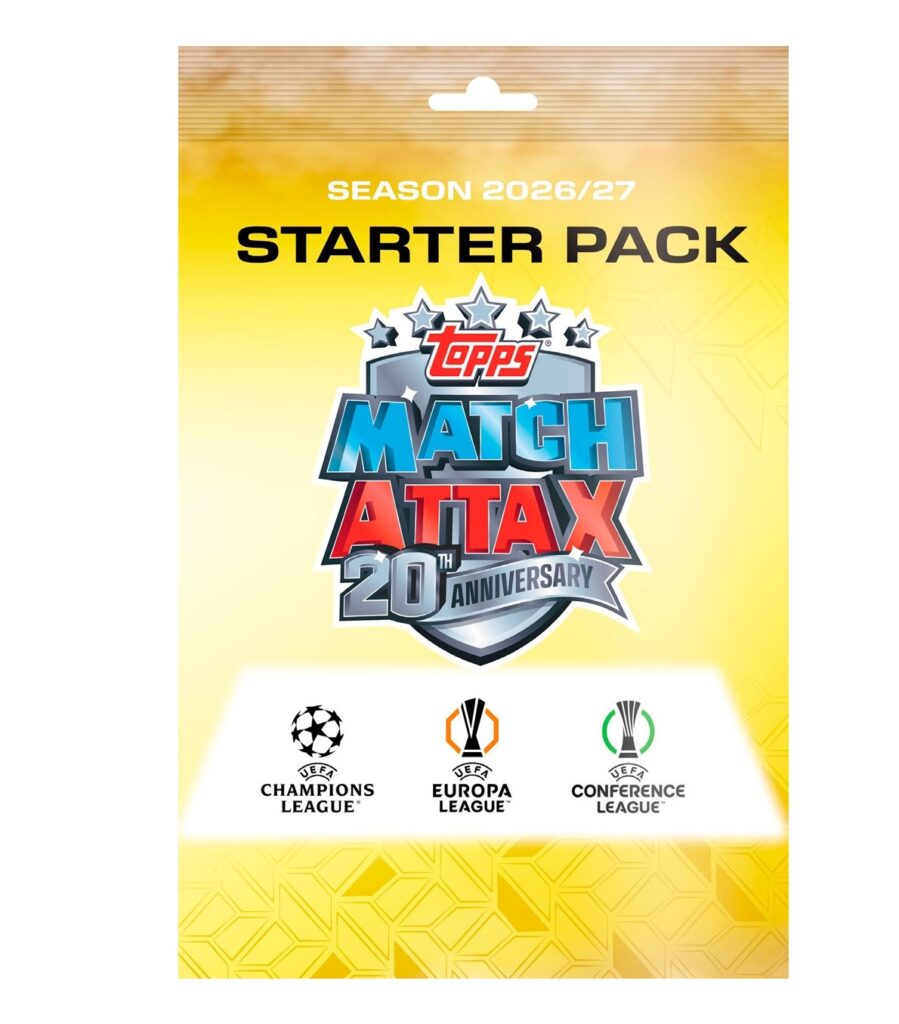
The Match Attax 2026/27 Starter Pack includes a 32-page binder, double-sided pitch and rules, a guide and checklist, three eight-card packets, a random Infinity card, a random anniversary Limited Edition and the exclusive Tactic Combo card.
That is 26 player cards plus the tactic card. One starter pack does not guarantee two complete 14-card squads, and random cards cannot guarantee the positions you need. Check your collection before promising a two-player match straight from one pack.
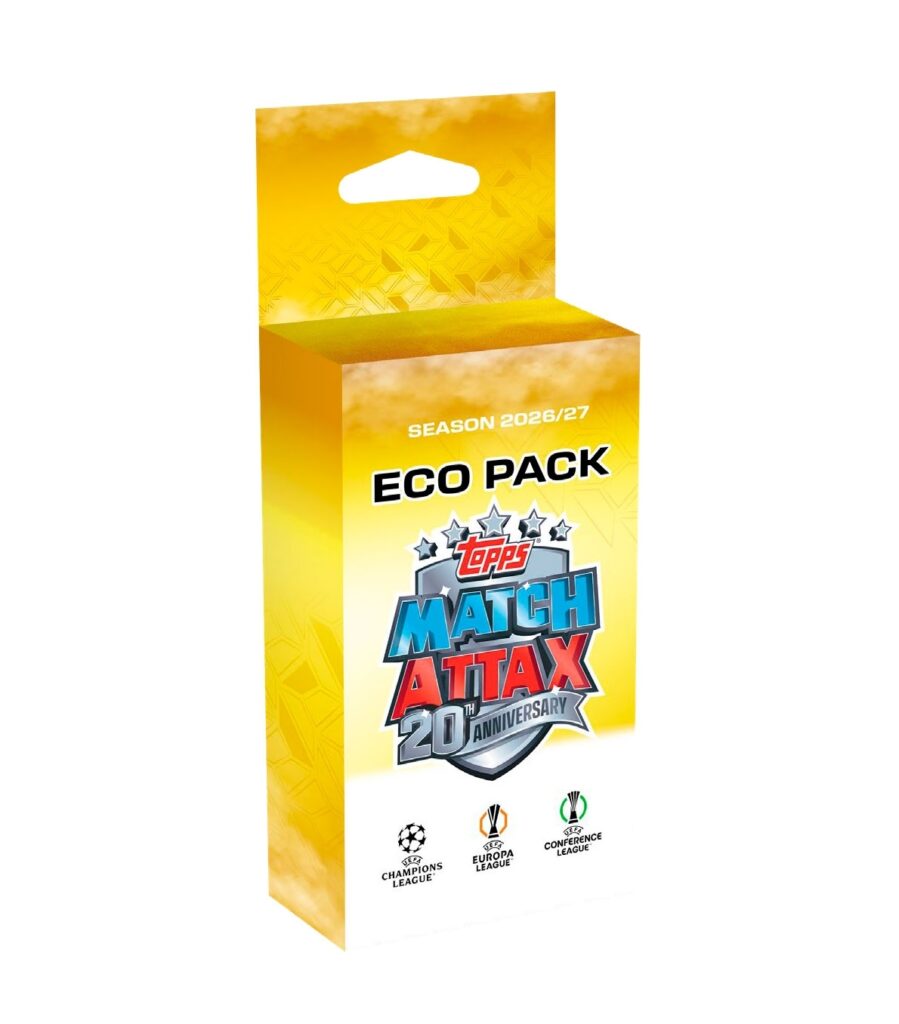
Extra eight-card packets build your options. The Eco Pack contains three eight-card packets and two Limited Editions, giving 26 cards. Neither guarantees a particular team balance.
Match Attax 2026/27 cards for your next game

Build a team that can play both ways
Start by sorting your cards into goalkeepers, defenders, midfielders and forwards. Check attack, defence and the goal-scoring number as well as the footballer’s name. A familiar superstar is tempting, but you also need cards that can handle the situations your opponent creates.
The eight formations in the current rules are:
- 4-4-2, 4-3-3 and 4-5-1
- 5-3-2, 5-2-3 and 5-4-1
- 3-5-2 and 3-4-3
The numbers describe defenders, midfielders and forwards. Arrange your starting XI face down, with the substitutes separate. The card backs show club and position, so your opponent has some clues about your available players without seeing every rating.
For a first game, choose a formation your collection comfortably supports. A balanced midfielder gives you useful flexibility because the rules do not reserve attacking for forwards or defending for defenders.
Is there a team budget?
The optional Pro Rules set a maximum team value of 100 million. Use the gameplay values printed on the cards, rather than their buying or resale prices. Topps does not specify a currency here.
The sheet does not explicitly say whether that cap includes the three substitutes. Agree that point before building budgeted teams; either interpretation should be understood as your table’s agreement rather than a confirmed official ruling.
Play your first rounds
Toss the coin and decide who has the first choice. That player chooses a face-down card and announces whether it will attack or defend. The opponent then chooses a card for the opposite role. Only reveal them once both choices are made.
Choosing to attack means comparing your attack against the opponent’s defence. Choosing to defend means comparing your defence against their attack. In either case, the higher relevant number wins.
All ratings in the examples below are illustrative, rather than statistics from named player cards.
An attack that earns two goals
You choose attack with a card rated 88. Your opponent reveals a card with 82 defence. You win the comparison.
If your winning card displays two goals, add two to your score. You now choose first in the next round. Put the used cards aside, keeping your winning and losing cards in separate piles.
This is why recording the score matters. Counting the cards in your winning pile will not necessarily tell you how many goals you have scored.
A defender gets on the scoresheet
Next time, you choose defence with a rating of 90. Your opponent must attack and reveals 86. You win again, and score the goal number printed on your defending card.
Winning on defence scores goals in the current rules. It also keeps the next first choice with you, which can make a strong defensive card valuable when you want control over the following round.
Equal ratings need a second comparison
Suppose your card has 85 attack and 40 defence, while your opponent has 85 defence and 35 attack. The initial 85–85 comparison is level.
Now add both ratings on each card. Your total is 125; theirs is 120. You win the round, score your card’s displayed goals and choose first next.
If the opponent instead has 85 defence and 40 attack, both combined totals are 125. Nobody scores. The player who chose first in that round chooses first again.
Substitutions and the final score
You can replace a player in your line-up with one of your three substitutes during the match. Announce the change before either player selects a card for that round. You cannot wait for the ratings to be revealed and then bring on someone better suited to the contest.
Substitutions are not allowed in the final round. Think about your bench while you still have choices left: a useful substitute sitting unused beside the pitch cannot rescue the last comparison.
The substitutes replace players in your line-up; they do not create three extra rounds. Continue setting played cards aside and recording goals until all cards have been played. The player with the most goals wins.
If the final totals are equal, the current sheet does not prescribe penalties or extra time. Any additional decider needs to be agreed between you.
How the Tactic Combo card works
The Tactic Combo offers four options. Each player can use two different options during a game, with each individual option usable only once. Both players may use their respective Tactic Combo cards in the same round, but neither can use one in the final round.
Topps’ general instruction is to identify your tactical choice when selecting your player card. Two options have timing questions, explained below, so discuss those before a competitive game.
AGENT
AGENT adds five million to the optional 100-million team-building budget. It gives you more room to select your squad; it does not add five points to a footballer’s attack or defence.
Its budget benefit belongs to team building, while the general tactic instruction describes declaring a choice during play. The current sheet does not reconcile those timings.
REFEREE
REFEREE reduces the opponent’s relevant card rating by five points. For example, your illustrative 84 attack would normally lose to 87 defence. With REFEREE reducing that defence to 82, you win.
That makes it useful when a small adjustment can change the result. Do not subtract five from both of the opponent’s ratings as a default.
VAR
VAR challenges a goal scored by your opponent. A coin toss decides whether it stands or is disallowed.
The sheet does not fully explain how that challenge fits the general declaration timing, or whether a successful challenge removes one goal or the whole scoring value of a multi-goal card. It also does not assign heads and tails. Agree those details before using VAR; those agreements are local interpretations, not additional official rules.
INJURY
INJURY forces your opponent to remove a player you select and replace them with a substitute.
If all their substitutes have been used and a position is empty at the end of the game, that vacancy earns you one goal. The rule does not award that goal immediately when INJURY is declared.
For your first match, it is perfectly reasonable to leave the optional tactics aside while you learn the basic rhythm. Bring them in once both players are comfortable with selection, scoring and substitutions.
Better decisions with the cards you own
Protect your flexibility
A card with one outstanding rating can be excellent when you control the choice. If your opponent chooses first, however, you must respond in the opposite category. Keep some cards that offer useful numbers on both sides, rather than spending all your adaptable players early.
Look at the goal number
A narrow win with a high-scoring card can be more valuable than a comfortable win worth one goal. When assessing a card, consider its scoring potential alongside the likelihood of winning the comparison.
This also changes how you read the match. Being ahead in rounds won does not guarantee you are ahead on the scoreboard.
Pay attention to what has been played
Once a strong attacking or defensive card has appeared, it is no longer waiting face down for a later contest. Watch the used cards and the positions still available. That information can help you judge when to commit a specialist, while remembering that the remaining ratings are still hidden.
Read special cards carefully
Special categories can bring stronger ratings and higher goal values. Use the ratings and goal number shown on the card, together with any clearly applicable tactic. Do not automatically add the category-table increases again to a figure already printed on the card.
If you want help identifying the different finishes and categories, our Match Attax 2026/27 rarity guide covers the collecting side. The complete checklist is useful when organising your available players.
Match Attax playing FAQs
Does the goalkeeper have a separate save rule?
The current physical-game instructions require at least one goalkeeper in your team, but do not give goalkeepers a separate save procedure. Resolve their card comparisons using the same attack, defence and tiebreak process.
Can I use duplicate cards or older-season cards?
The current sheet does not explicitly settle duplicate cards, different versions of the same footballer or older-season cards. Agree your card pool before selecting teams, particularly if you are mixing collections.
Do I need rare cards to start playing?
You can learn the game with a position-balanced selection of ordinary player cards. Rarer cards expand your team-building choices, but the same core comparison and scoring rules apply. For a friendly first game, choosing broadly comparable squads together can make learning more enjoyable.
Once you have a legal formation, a bench and someone to play against, you are ready for kick-off. Browse Bomran’s Topps range if you need more cards, then put your team selection to the test.
Rules checked against the official Topps UEFA Match Attax 2026/27 English instructions on 13 October 2026.