
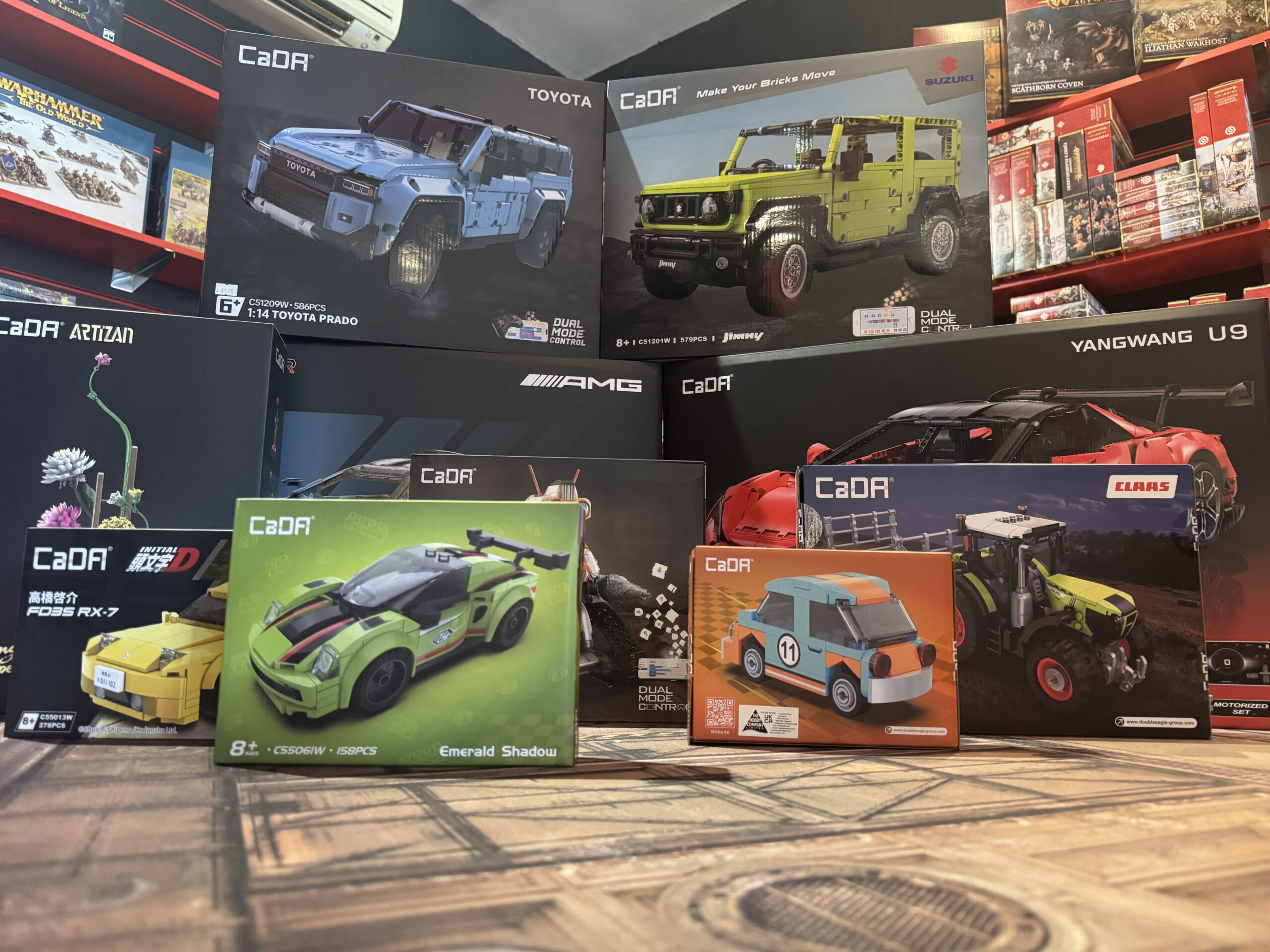
Discovering CaDA for the first time can be slightly overwhelming.
You might begin by looking at one of the brand’s compact cars, only to discover larger licensed vehicles, remote-controlled models, construction machinery, detailed buildings, flowers, robots and substantial Master Series projects.
Suddenly, the question isn’t simply:
“Which CaDA set should I buy?”
It’s:
“Which CaDA set is right for me?“
Fortunately, choosing your first model becomes much easier once you stop looking at individual boxes and start thinking about the kind of building experience you actually want.
Someone fascinated by cars may be happiest starting with a compact 1:24 model. A mechanically minded builder might prefer something with moving parts or remote control. Someone interested in architecture could get far more enjoyment from constructing a detailed building, while another person may simply want a relaxing decorative project for their desk or shelf.
There is no universally correct first CaDA set.
The goal of this guide is therefore not to tell you which model you should buy.
Instead, we’ll help you work through the decisions that matter – from subject and complexity to scale, functions, budget and display space – so you can choose a first build that genuinely suits you.
The Bomran Guide
Beginner’s Buying Guide
📖 Reading Time: 10–12 minutes
👤 Perfect For:
- Anyone buying their first CaDA set
- New brick-building enthusiasts
- Adults looking for a new building project
- Parents and gift buyers comparing CaDA models
🎯 In This Guide You’ll Learn:
- How to choose the right type of CaDA model
- What CaDA scales and piece counts actually mean for your build
- When to choose manual, mechanical or motorised models
- How to match your first set to your budget, experience and display space
📚 Related Guides
- What Is CaDA? The Complete Beginner’s Guide
- Understanding the CaDA Range
- The Best CaDA Sets for Adults
- CaDA Master Series Explained
This guide is regularly reviewed and updated as new CaDA models and collections arrive at Bomran Games.
Before You Buy: Six Questions to Ask Yourself
You don’t need to understand every CaDA collection before buying your first set.
In fact, you can narrow the range down surprisingly quickly by answering six questions:
- What do I actually want to build?
- How involved do I want the build to be?
- Do I want a static model or working functions?
- What size model do I want?
- How much do I want to spend?
- Where will the finished model go?
Let’s work through them one at a time.
Step 1: Choose Something You Actually Want to Build
This sounds obvious, but it is probably the most important piece of advice in this entire guide.
Don’t choose your first CaDA model because somebody else says it is the best one.
Choose a subject that interests you.
CaDA’s range now covers considerably more than cars, which means your first decision should really be about the subject rather than the technical specification.
If You Love Cars
You’re spoilt for choice.
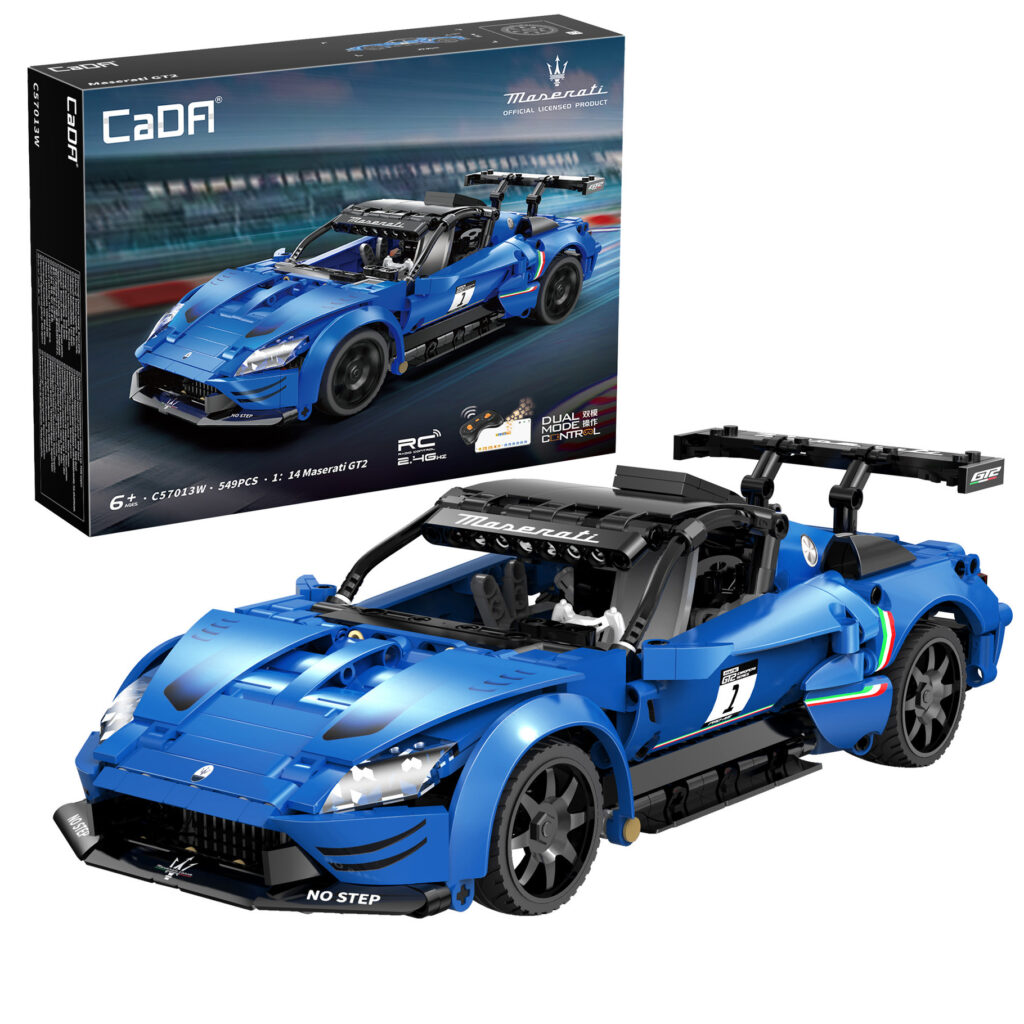
CaDA offers vehicles across several scales, from small collectable cars through to substantial premium models.
A smaller 1:24 car can be an excellent introduction because it gives you the satisfaction of completing a recognisable vehicle without demanding too much time or display space.
If you enjoy it, you can then move upwards into larger 1:20, 1:14, 1:10, 1:8 or Master Series projects.
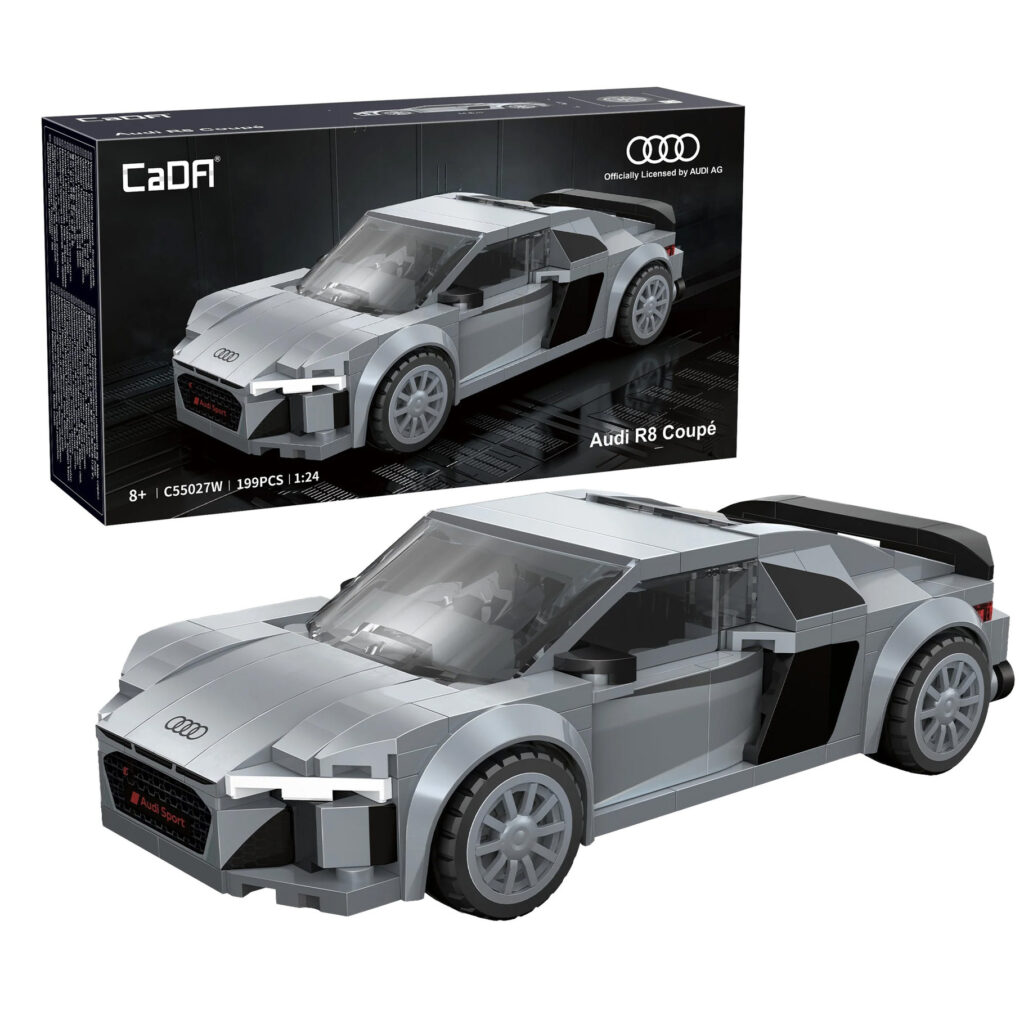
CaDA 1:24 Audi R8 Coupé C55027W
CaDA 1:24 Audi R8 Coupé C55027W is an officially licensed 199-piece silver sports-car model with printed details and manual movement.
If You Love Engineering and Machinery
Don’t assume you need to buy a supercar.
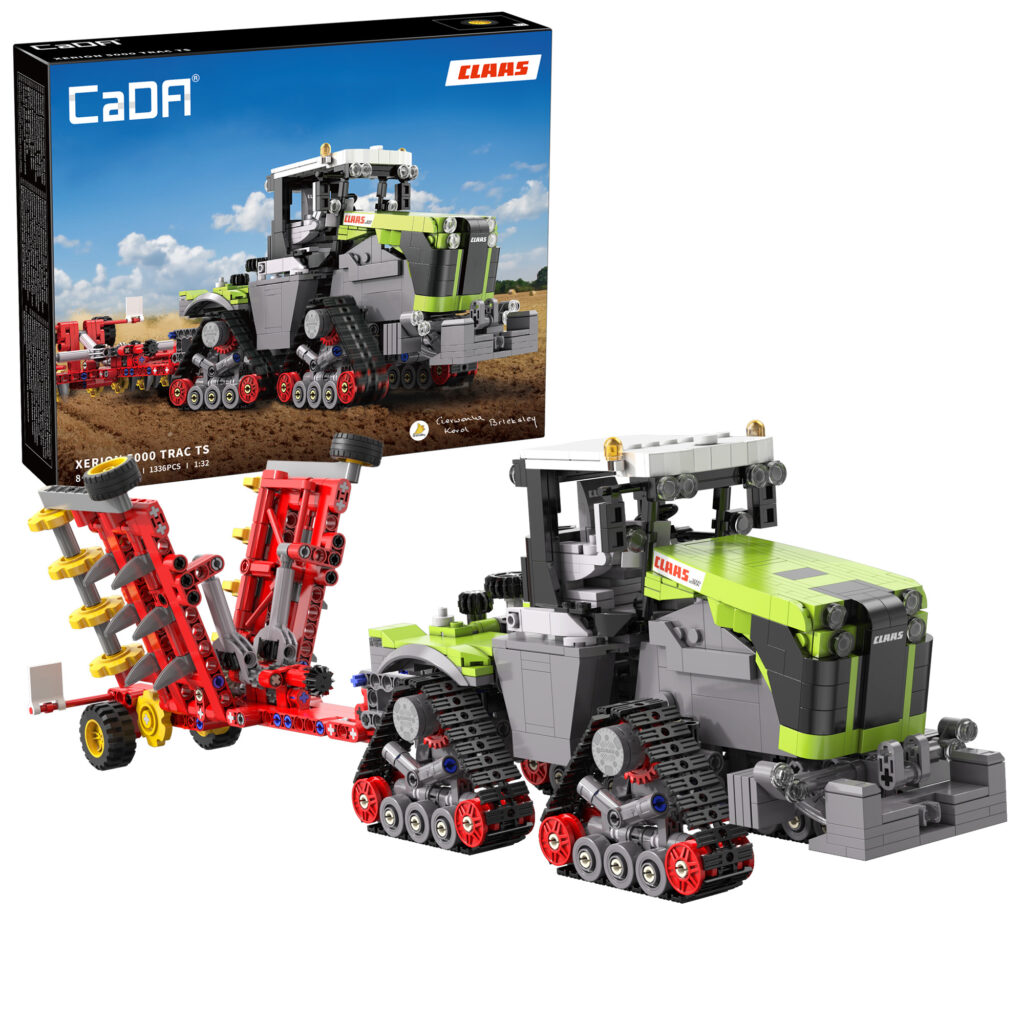
CaDA’s Construction & Farm collection includes tractors, agricultural equipment and construction machinery that put mechanical functions at the centre of the experience.
For someone interested in how machines work, these can make a much more rewarding first project.
The important distinction is that you’re building something because the mechanism interests you, not simply because you recognise the badge on the bonnet.
If You Love Architecture
The Building Series takes CaDA in a completely different direction.
Instead of assembling a chassis and covering it with body panels, you’re creating walls, rooms, furniture, façades and miniature environments.
Models such as the Japanese-style buildings also demonstrate why piece count alone can be misleading when choosing difficulty. A building may contain hundreds of pieces without necessarily requiring the same kind of mechanical reasoning as an advanced vehicle.
Choose this route if you enjoy detail, interiors and creating something atmospheric for display.
If You Want Something Relaxing
Not everybody wants gears and suspension.
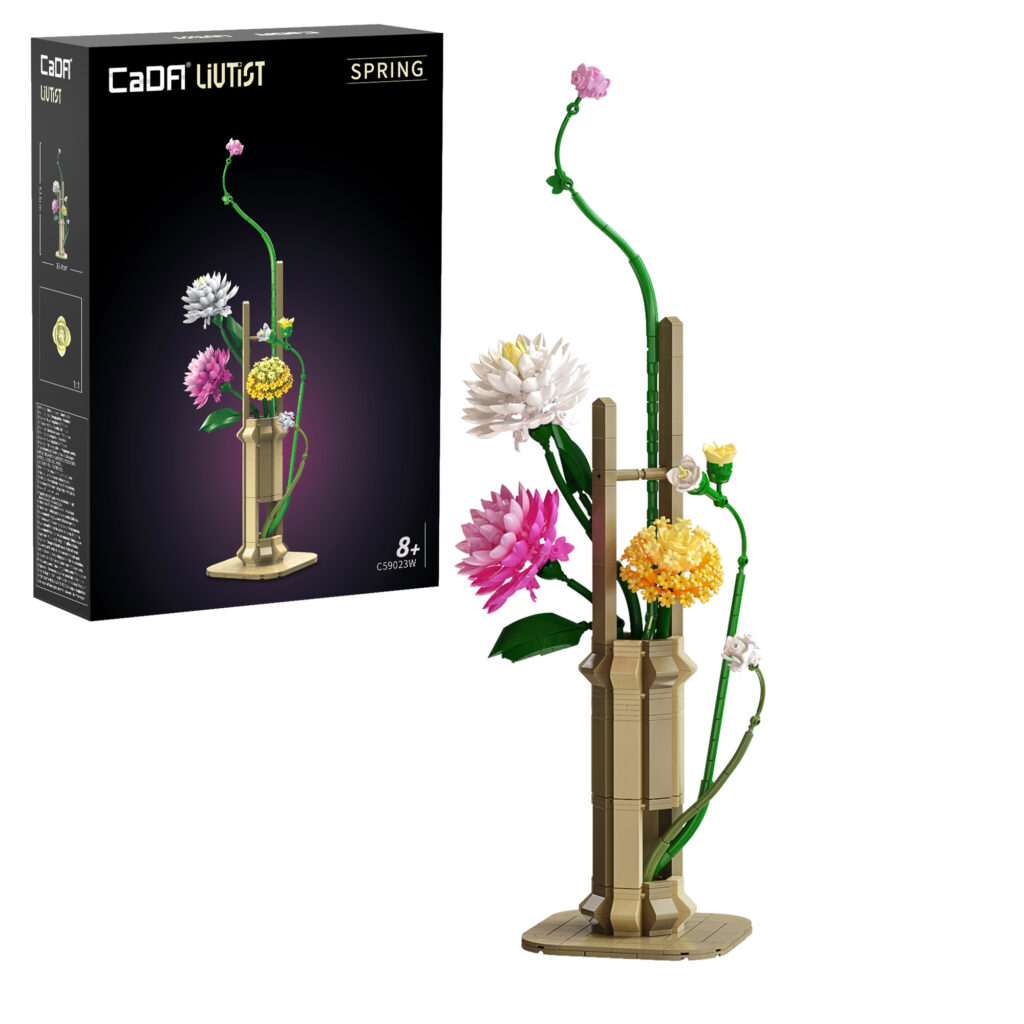
CaDA’s Flowers Artizan collection offers decorative models where the emphasis is on shape, arrangement and the finished display.
These can be excellent first builds for someone who enjoys craft, flowers or interior decoration but has little interest in vehicles.
If You Like Technology, Coding or Robots
Look towards CaDA’s interactive and STEAM-focused products.
These can combine brick construction with remote control, motors, mobile-app operation and, on selected models, simple visual programming.
The important thing to understand is that STEAM describes the experience and functionality, rather than simply the size of the model.
That’s why some CaDA products can belong to both a scale-based category such as 1:20 Cars and the STEAM collection.
Step 2: Decide How Much of a Project You Want
Once you’ve chosen the type of model that interests you, think about the experience itself.
Do you want something you can finish relatively quickly?
Or do you want a project that sits on the table for several evenings?
Neither is better.
They’re simply different ways of enjoying the hobby.
A Quick First Build
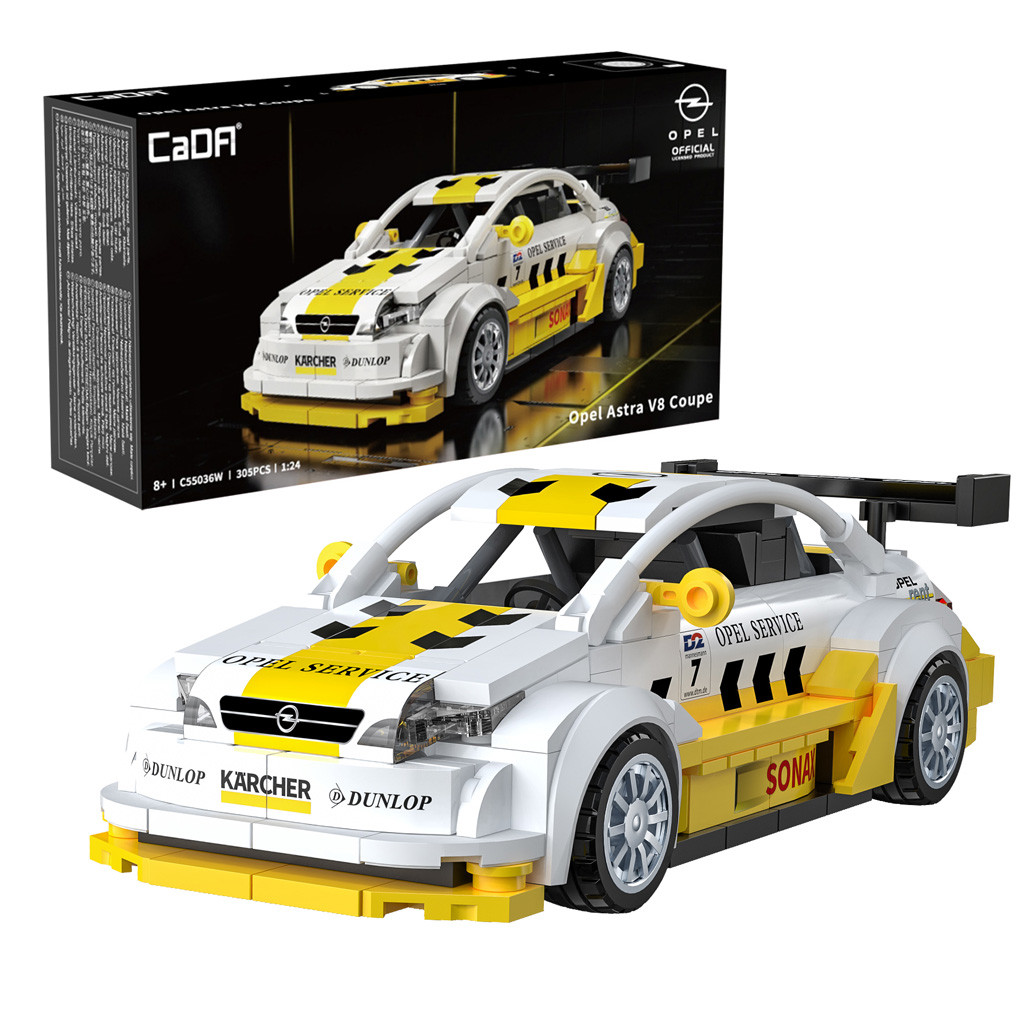
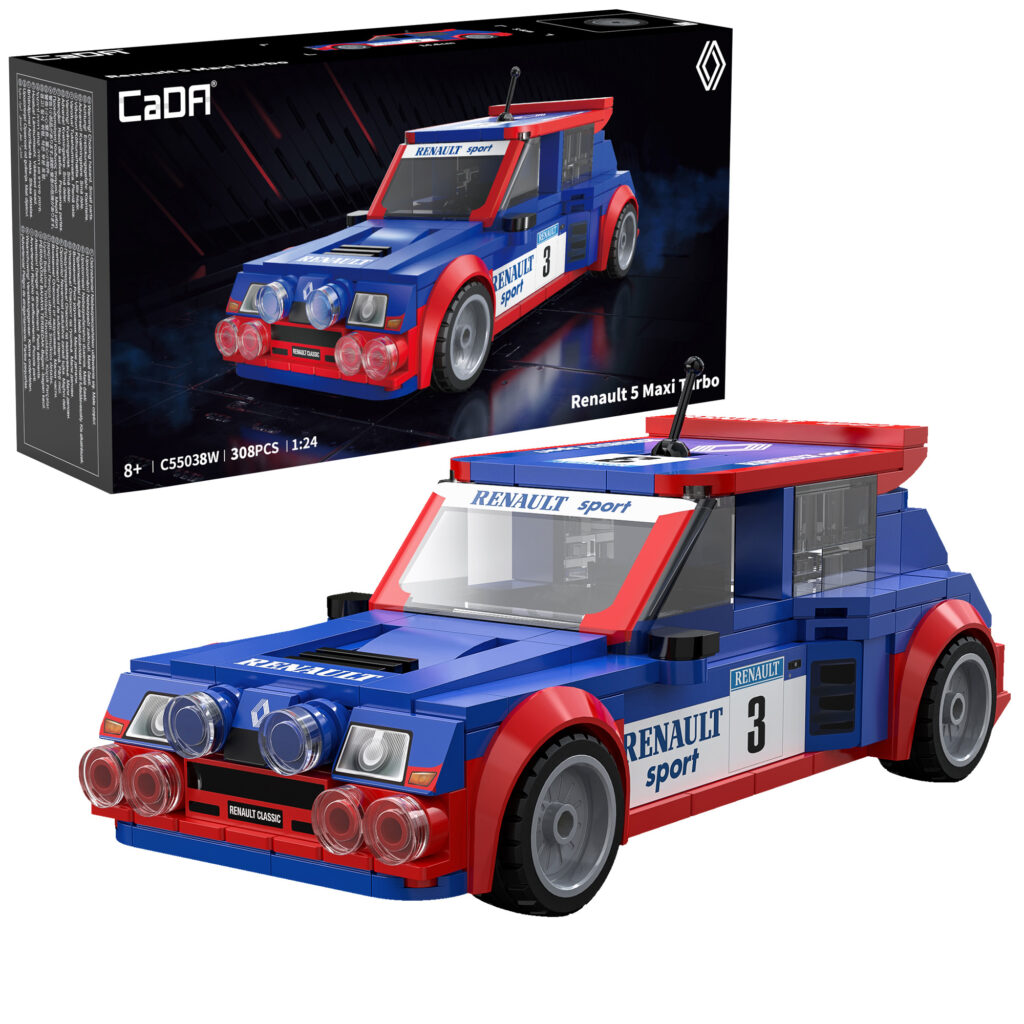
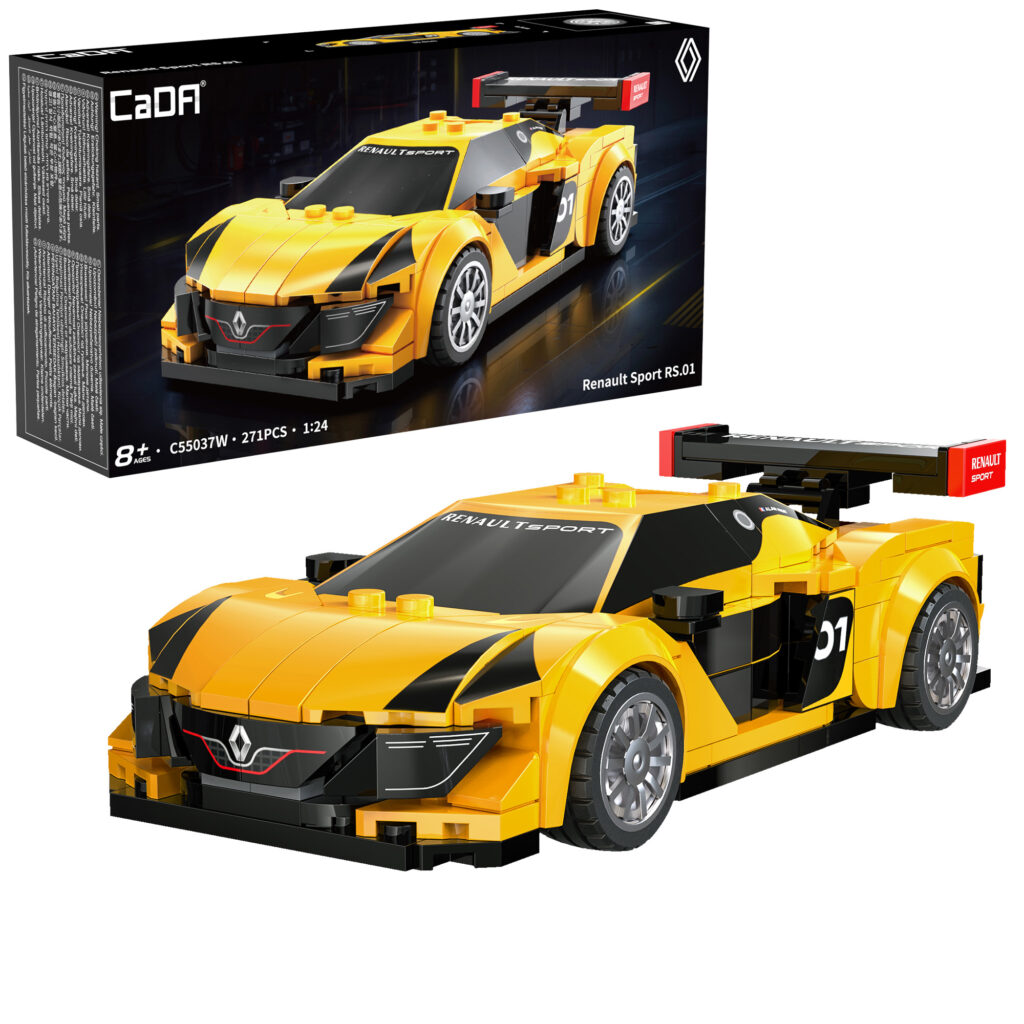
A smaller CaDA model is often the safest place to begin if you’re completely new to brick-building.
It lets you learn how CaDA’s pieces, instructions and construction techniques work without making a major commitment.
This is also a sensible approach for someone who isn’t yet sure whether brick-building will become a regular hobby.
Recommended products
A Satisfying Weekend Project
If you’ve built construction sets before, you may want something more substantial from the outset.
This is where mid-sized cars, buildings, machinery and creative models become interesting.
They provide enough construction to feel like a proper project without necessarily committing you to one of CaDA’s largest builds.
For many adults, this is probably the sweet spot for a first set.
A Major Building Project
If you’re already an experienced brick builder, modeller or technically minded hobbyist, there’s nothing wrong with beginning with something ambitious.
If most of that experience is with LEGO or Technic-style models, our CaDA vs LEGO guide explains what will feel familiar and what will differ.
Larger cars and Master Series models can provide hours of detailed construction and impressive finished displays.
However, don’t choose a large set simply because it has more pieces.
A first project should leave you wanting to build another model – not make you feel as though you’ve completed an endurance test.
Does Piece Count Tell You How Difficult a CaDA Set Is?
Not entirely.
Piece count tells you something about the size and length of the project, but it doesn’t automatically tell you how technically challenging it will be.
Imagine two models with a similar number of pieces.
One might be an architectural building made from many relatively straightforward walls, furnishings and decorative details.
The other might be a mechanical model containing gears, linkages and moving assemblies.
They may have similar piece counts but offer very different building experiences.
A useful rule is:
Use piece count to estimate the scale of the project – not your ability to complete it.
Instead, look at the model’s subject, functions, recommended age and stated difficulty alongside the piece count.
Step 3: Manual, Mechanical or Motorised?
This is one of the most important decisions when choosing a CaDA set because it changes what happens after you’ve finished building.
Manual Models
These are traditional brick-building projects without powered movement.
That doesn’t necessarily mean they have no functions. A car might still include opening panels, steering or other manually operated elements.
Manual models are often ideal if the building and display experience is your main priority.
Mechanical Models
Some sets use gears, linkages and moving components without requiring motors.
These can be particularly satisfying because you physically see the mechanism you’ve constructed doing its job.
For technically minded builders, this can actually be more interesting than simply pressing a button.
Motorised and Remote-Controlled Models
If you want to drive or operate the finished model, look for powered CaDA sets.
Depending on the individual product, this may include a traditional remote controller, mobile-app control or both.
Some models also introduce programming features, allowing you to create basic movement sequences through the app.
Important: don’t assume every CaDA vehicle is motorised or that every model includes the same electronic components. Always check the individual product’s box contents before buying.
A Useful Example: Scale vs Function
This is where CaDA’s categories can initially seem confusing.
Imagine you’re looking at a 1:20 car.
The 1:20 designation primarily tells you about the approximate scale of the finished vehicle.
But that same model might also appear within STEAM because it includes interactive technology such as motorisation, app control or programming.
So when choosing your first set, think about these as two separate questions:
Scale: How large do I want my model to be?
Function: What do I want my model to do?
Once you understand that distinction, navigating the CaDA range becomes considerably easier.
First Checkpoint: What Kind of Builder Are You?
By this stage, you should already be able to narrow your choices considerably.
Choose a smaller car if:
You want an accessible, recognisable first build that’s easy to display.
Choose STEAM if:
You want motors, remote control, app interaction or programming.
Choose Construction & Farm if:
The engineering interests you more styling.
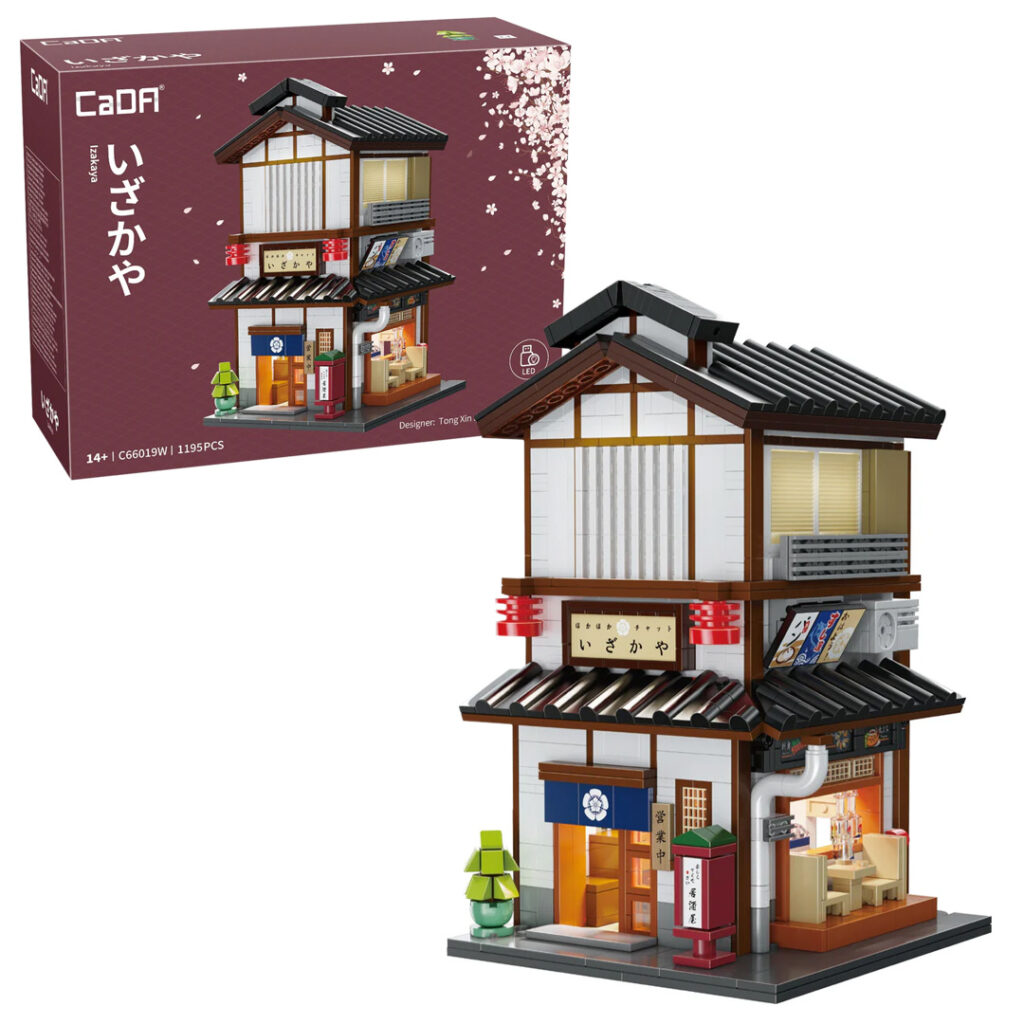
Choose Building Series if:
You enjoy architecture, setting interiors and highly detailed display models.
Choose Flowers Artizan if:
You want something decorative and relaxing.
Choose a larger car or Master Series model if:
You’re already comfortable with substantial hobby projects and want something more involved.
Recommended products
Where We’re Going Next
We’ve now answered the three biggest questions:
What do you want to build?
How substantial should your first project be?
Do you want a static, mechanical or powered model?
The next decisions are more practical.
In the next part of this guide we’ll look at scale and finished size, display space, budget, whether you need a Power Pack, choosing CaDA as a gift, and the mistakes we’d avoid when buying your first set.
That’s where we’ll turn everything above into a simple method for choosing the right first model.
How to Choose Your First CaDA Set
Step 4: Choose the Right Scale
If you’re considering one of CaDA’s vehicle models, you’ll quickly encounter descriptions such as 1:24, 1:20, 1:14, 1:12, 1:10 and 1:8.
These numbers describe the approximate scale of the model compared with the real vehicle.
A 1:24 car is approximately one twenty-fourth the size of the real vehicle, while a 1:8 model is approximately one eighth of the full-size car.
That means something slightly counter-intuitive:
The smaller the second number, the larger the model.
So a 1:8 CaDA car will generally be substantially larger than a 1:24 car.
For a first-time buyer, however, scale shouldn’t become something to obsess over. What matters is how the scale affects the building experience, finished size and amount of space you’ll need.
Why Scale Matters
Moving up through CaDA’s vehicle scales generally creates more room for detail and mechanical functions.
A compact car can capture the recognisable shape of the original vehicle while remaining relatively straightforward to construct.
A much larger car provides the designers with considerably more internal space for structural elements, steering systems, suspension, drivetrains and other mechanisms.
That’s part of the reason larger CaDA models can feel so different to build.
You’re not simply creating a bigger version of the same thing.
You’re creating a model with enough physical space for considerably more engineering.
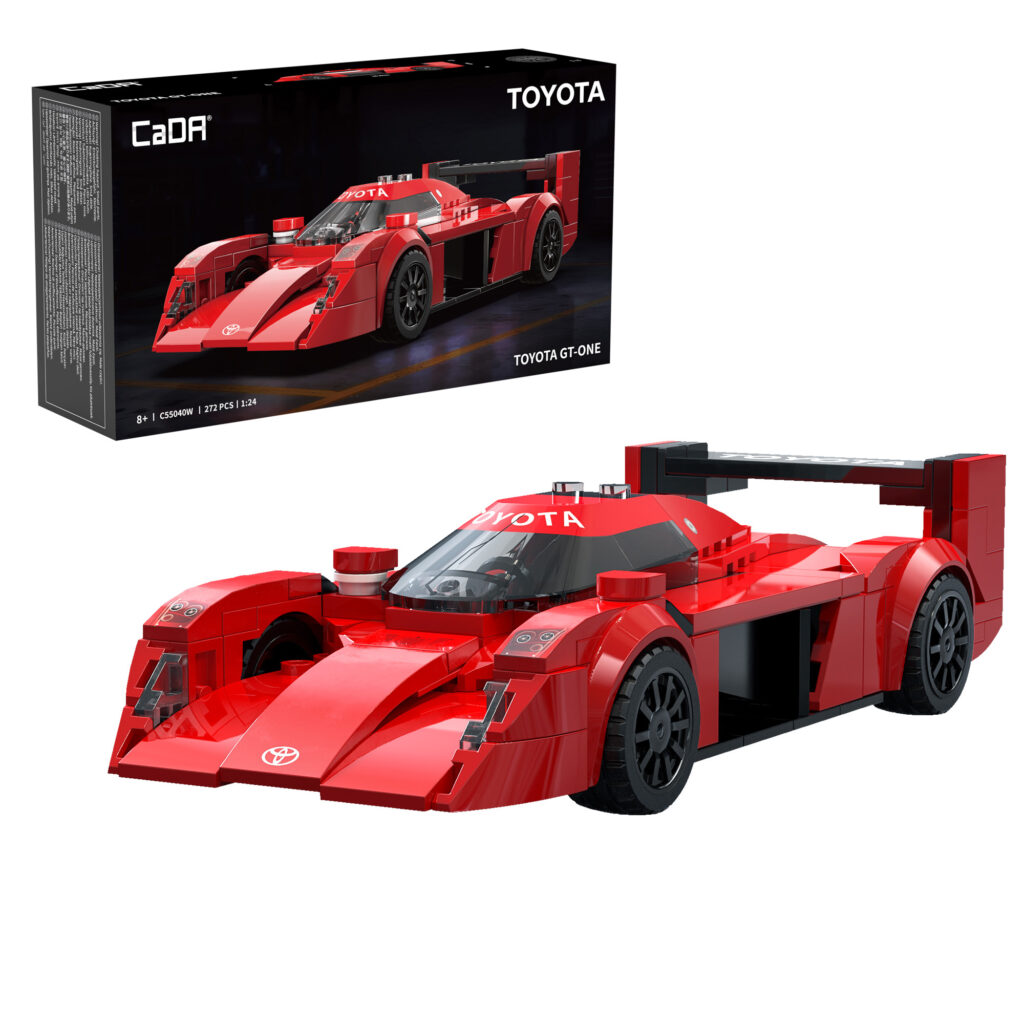
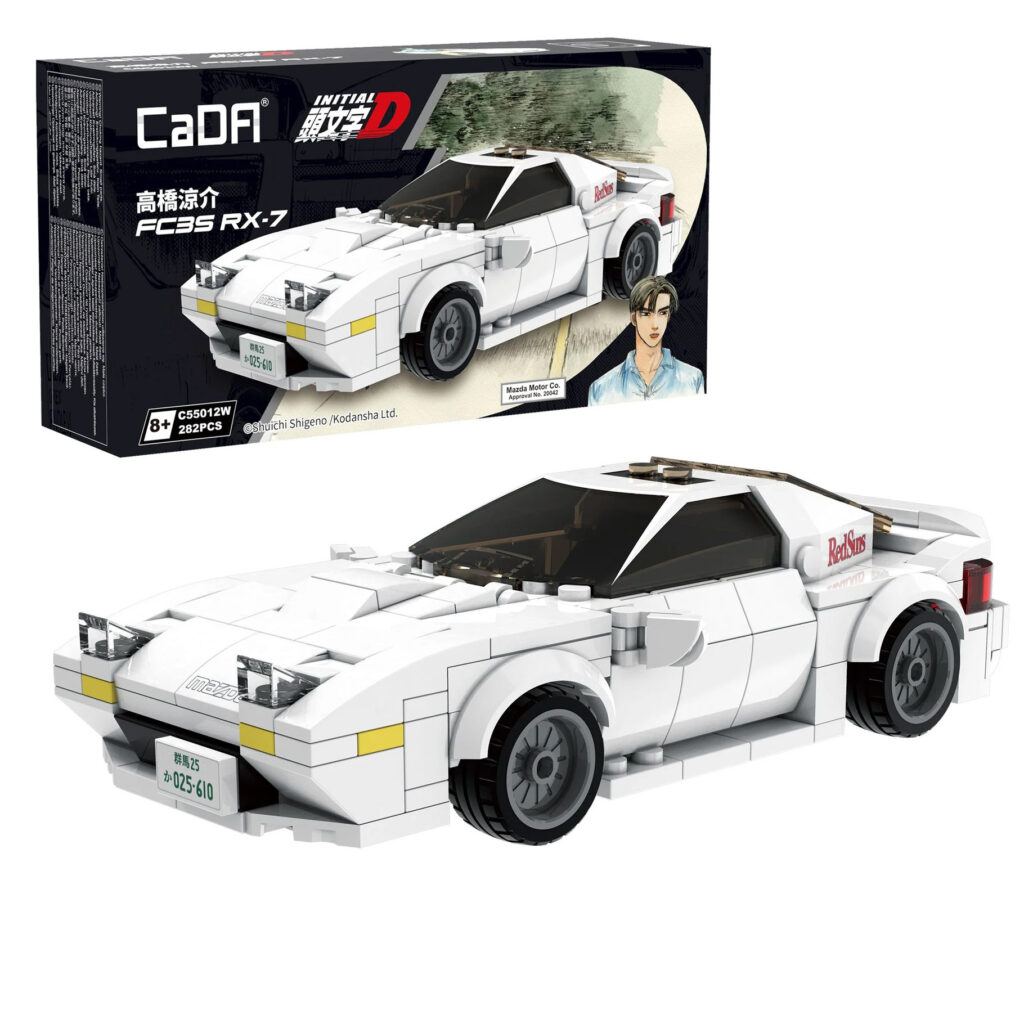
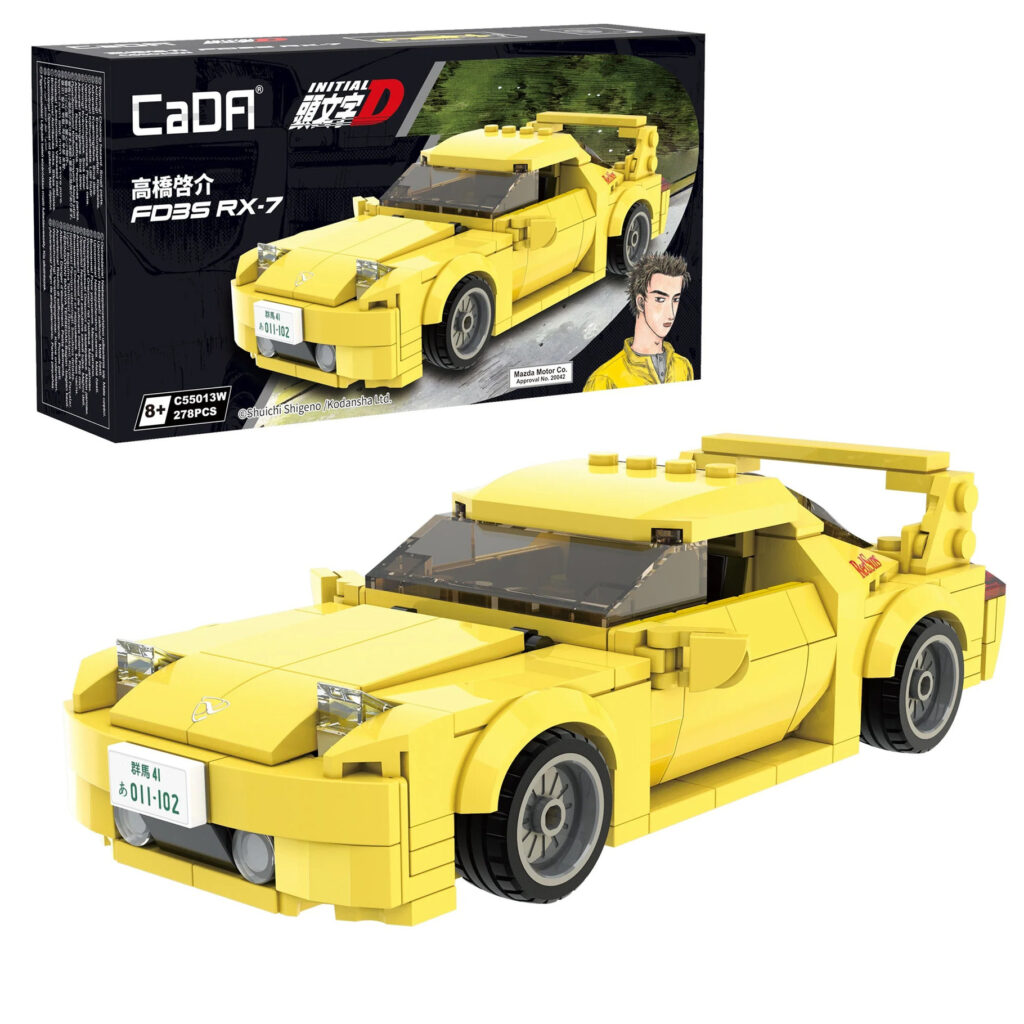
1:24 – An Excellent Starting Point
For someone completely new to CaDA, the 1:24 car range is one of the easiest places to begin.
These models are compact, relatively quick to build and easy to display.
They also work particularly well as collections.
A single 1:24 car takes up relatively little shelf space, which means you can gradually add more models without immediately needing a dedicated display cabinet.
The range also contains recognisable licensed vehicles, making it easy to choose something based simply on the car you like.
Best suited to:
- First-time CaDA builders
- Car enthusiasts wanting an accessible project
- Collectors planning to own several models
- Gift buyers
- Builders with limited display space
If Initial D brought you to CaDA, our Initial D guide compares the compact cars with the larger AE86 and RX-7 builds.
Recommended products
1:20 – More Build Without Becoming Huge
Moving into 1:20 gives you a little more room for construction and functionality while keeping the finished model manageable.
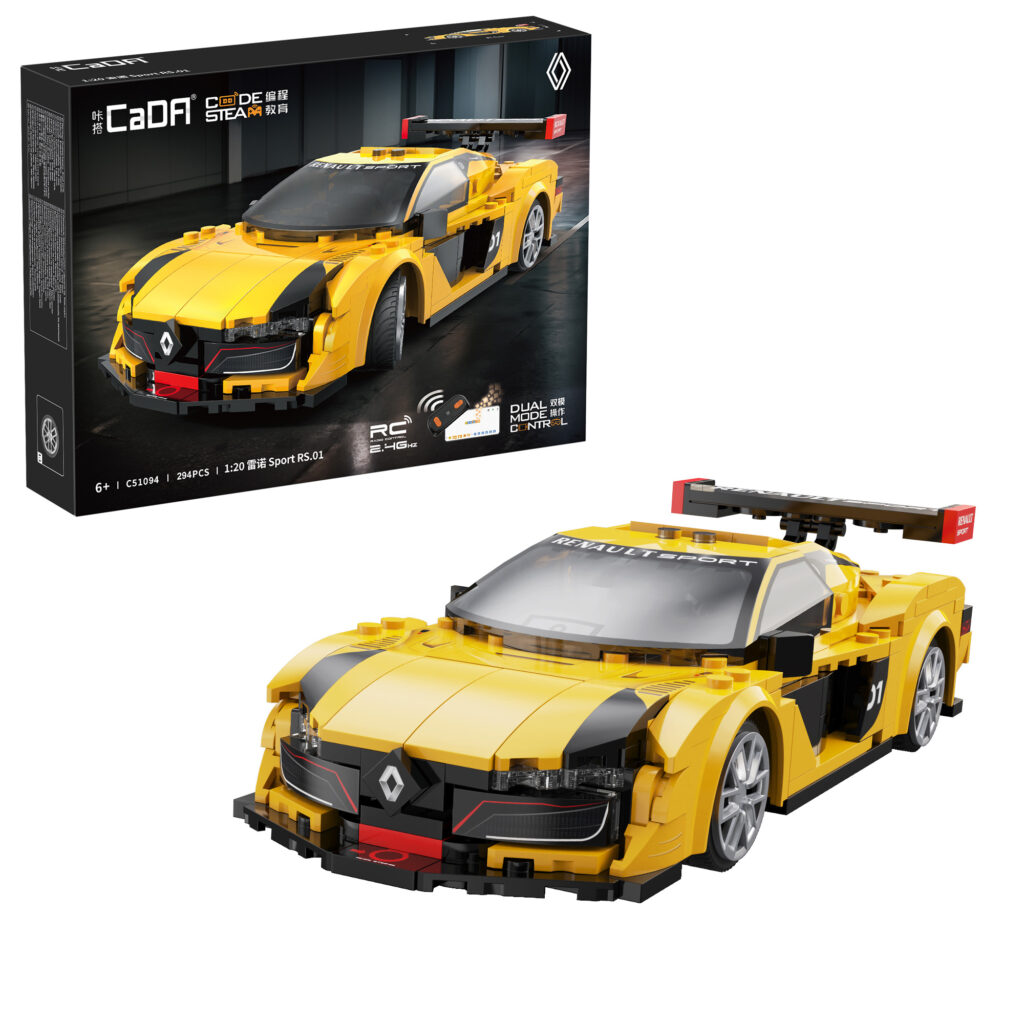
This is a particularly interesting part of CaDA’s catalogue because some 1:20 vehicles also overlap with the STEAM range.
That means you’ll find both relatively straightforward vehicle builds and more interactive models incorporating powered functions.
For an adult buying their first CaDA set, 1:20 can therefore represent an excellent middle ground.
You get something more substantial than the smallest models without immediately jumping into the scale, price and complexity of CaDA’s largest cars.
Best suited to:
- Adults wanting a more substantial first project
- Car enthusiasts
- Builders interested in powered functions
- Anyone wanting a balance between size and display practicality
1:14 and 1:12 – Moving Into Larger Projects
Once you reach 1:14 and 1:12 scale, you’re beginning to enter more substantial territory.
These models can provide additional room for functions and detail while creating a finished model with noticeably more presence.
They may be an excellent first CaDA project for someone who already has experience with brick-building, model kits or other construction hobbies.
For somebody completely new, however, we’d usually recommend asking yourself whether you actually want a longer project before choosing purely on size.
A bigger model isn’t automatically a better first model.
1:10 and 1:8 – Serious Display Models
At the larger end of the automotive range, CaDA’s 1:10 and particularly 1:8 models become much more significant projects.
These are the types of models you build because you want the project itself to become part of the hobby.
The finished vehicles also require considerably more display space.
That makes them fantastic choices for experienced builders, but they’re not necessarily where we’d direct every newcomer.
If you’re tempted by one, that’s perfectly fine.
Just understand what you’re signing up for.
What About Master Series?
Scale and collection are not the same thing.
The Master Series identifies CaDA’s premium, design-led collection rather than one single vehicle scale.
These models focus heavily on the building experience, engineering and finished presentation.
If you’re already an experienced modeller or brick builder, there’s no rule saying you can’t make a Master Series project your first CaDA set.
However, if you’re completely new to construction models, we’d usually suggest trying something smaller first.
Not because you couldn’t complete a Master Series model.
Simply because a smaller project gives you an inexpensive way to discover whether you enjoy CaDA’s building style before committing to something much larger.
Step 5: Think About the Finished Model Before Buying
One of the easiest mistakes to make when buying a construction set online is concentrating entirely on the box.
- Piece count.
- Features.
- Price.
- Photographs.
But there’s another question that’s just as important:
Where is the finished model going to go?
A model that looks perfectly manageable on a computer screen can be surprisingly substantial once it’s sitting on your desk.
Before purchasing a larger set, check the finished dimensions on the individual product listing.
Then physically look at the space where you intend to display it.
It sounds almost too simple to mention, but doing this can prevent a lot of frustration later.
Think Like a Collector
If you suspect one CaDA model might eventually become ten, think ahead.
This is where smaller scales become particularly attractive.
A collection of 1:24 cars can create an impressive display without consuming an enormous amount of space.
Likewise, several Building Series models can be arranged together to create a street scene.
Individual Flowers Artizan models can be distributed around a room rather than displayed as one large collection.
Larger Master Series and 1:8 models work differently.
They tend to become individual centrepieces.
Neither approach is better.
But knowing which type of collector you are likely to become can influence the best place to start.
Step 6: Decide Your First-Set Budget
Your first CaDA set doesn’t need to be expensive.
In fact, we’d generally recommend choosing your budget after deciding what kind of model interests you.
Otherwise, it’s very easy to assume that spending more automatically produces a better building experience.
It doesn’t.
A smaller model of a car you love can be much more enjoyable than an enormous model of something you don’t particularly care about.
Think of CaDA’s range in broad terms.
Entry-Level
Compact cars and smaller creative models provide an inexpensive introduction to the system.
These are particularly useful if you’re simply curious about CaDA and want to experience the bricks and instructions before committing further.
Mid-Range
This is where many first-time adult buyers will probably find the sweet spot.
You’ll encounter larger cars, interactive models, buildings and more involved projects that offer a substantial building experience without requiring the commitment associated with the premium ranges.
Premium
Large cars, technically ambitious machinery and Master Series projects sit towards the upper end.
Here you’re paying for a much more substantial project, increased engineering complexity, larger finished dimensions and, depending on the individual model, additional functionality.
The important thing is to match the price to the experience you actually want.
Should You Buy a Power Pack With Your First CaDA Set?
Not automatically.
This is an area where checking the individual product description is essential.
Some CaDA sets are designed as manual builds.
Some include powered components.
Others may support motorisation through separate Power Packs or upgrade components.
If motorisation is important to you, don’t assume you’ll be able to add it later to every model.
Check the specific set before purchasing.
Likewise, don’t buy a Power Pack simply because you’re buying CaDA.
If the model you’ve chosen doesn’t require one, there is no benefit in adding electronics you don’t need.
Do You Actually Need Remote Control?
This is worth considering carefully.
Remote control sounds attractive, particularly if you’re buying a car.
But ask yourself what you actually want from the finished model.
If it’s going directly into a display cabinet, motorisation may not be particularly important.
If you want to interact with it after construction, powered functions become much more valuable.
For younger builders, remote control can add substantial play value.
For technically minded adults, the attraction may instead come from understanding how the motors, steering and control systems integrate into the model.
Neither approach is wrong.
The key is paying for functionality because you’ll use or appreciate it – not simply because it’s available.
Buying CaDA as a Gift
Choosing a first CaDA set for somebody else requires a slightly different approach.
You may not know exactly how experienced they are with brick-building.
In that situation, start with their interests, not their assumed ability.
Do they love:
- Cars?
- Motorsport?
- Tractors and machinery?
- Architecture?
- Flowers?
- Space?
- Robots?
Once you’ve established the subject, look at age guidance, finished dimensions and the general scale of the project.
Unless you know the recipient specifically enjoys very large construction projects, we’d normally avoid jumping immediately to the biggest set available.
A well-chosen medium-sized model often makes a better gift than an enormous project selected purely because the box looks impressive.
Buying for an Adult
For an adult hobbyist, don’t be afraid to choose something relatively involved.
If they already build scale models, Gundam kits, complex construction sets or similar hobby projects, they’re unlikely to be intimidated by a larger CaDA set.
Their existing hobbies can actually tell you a lot.
Someone who loves automotive modelling may appreciate a detailed car.
Someone interested in mechanical engineering may prefer Construction & Farm.
Someone who builds dioramas may find the Building Series more appealing.
Someone interested in interior design or crafts may enjoy Flowers Artizan.
Think about the hobby they already have – then use CaDA to approach it from a new direction.
Buying for a Younger Builder
Follow the manufacturer’s recommended age guidance for the individual set.
Also consider whether the child enjoys building, playing, or both.
A detailed static display model might fascinate one young builder and completely bore another.
An interactive or remote-controlled model may provide considerably more enjoyment for someone who wants to continue playing with their creation after construction.
The best first CaDA set is the one suited to the person receiving it.
Not the one with the biggest number printed on the box.
The First CaDA Decision Path
If you’re still unsure, work through this from the top.
1. What interests you most?
Cars
→ Go to Question 2.
Machinery and engineering
→ Explore Construction & Farm.
Architecture and interiors
→ Explore Building Series.
Flowers and decorative models
→ Explore Flowers Artizan.
Space, technology and robots
→ Explore Space & Robots or STEAM.
2. If you chose cars: what do you want from it?
A straightforward first build
→ Start around 1:24.
A more substantial car
→ Explore 1:20.
Remote/app control
→ Explore STEAM and motorised cars.
A large engineering project
→ Explore 1:10, 1:8 and Master Series.
3. How much time do you want to spend building?
A shorter introduction
→ Choose a compact model.
Several enjoyable sessions
→ Choose a mid-sized car, building or machinery set.
A major hobby project
→ Consider the larger scales or Master Series.
4. What happens after you’ve built it?
Display it
→ Prioritise subject, appearance and finished dimensions.
Collect more models
→ Consider a compact scale or connected Building Series.
Operate it
→ Look for STEAM, RC or powered functions.
Learn from the mechanisms
→ Look towards engineering-led vehicles and Construction & Farm.
5. Still undecided?
Don’t buy the biggest model.
Choose the subject you’re most excited to build at a price you’re comfortable paying.
That’s almost always the better starting point.
A Simple Example
Imagine two customers have the same £30–£50 budget.
The first loves performance cars and wants something they can control after building.
The second has no interest in cars but loves Japanese architecture.
The “best CaDA set” for those two people could not be more different.
The first might naturally gravitate towards a motorised 1:20 or STEAM model.
The second would be much better served by putting that budget towards an architectural set they genuinely want to display.
That’s why we don’t think beginners need a universal best first CaDA set.
They need a method for choosing one.
Before You Choose: Five Things to Check on the Product Page
Once you’ve narrowed your shortlist down, check the individual listings for:
- Recommended age
- Piece count
- Finished dimensions
- Included functions and electronics
- Exactly what’s included in the box
If all five match what you’re expecting, you’re probably looking at the right kind of project.
Where Next?
At this point, you should know:
- what subject interests you,
- approximately how substantial you want the project to be,
- whether you want powered functions,
- which scale suits you,
- how much space you have,
- and roughly what you want to spend.
That leaves one final question:
Which actual CaDA sets would we recommend as first builds?
In the final part of this guide, we’ll put everything above into practice with a carefully selected group of models from the current Bomran Games range.
Rather than simply choosing the most expensive or popular products, we’ll recommend different starting points for different kinds of builders – followed by the mistakes we’d avoid, frequently asked questions and our final advice for choosing your first CaDA set.
Which CaDA Sets Do We Recommend for First-Time Builders?
By now, you should have a reasonable idea of what you’re looking for.
You know the subject that interests you.
You’ve considered the size of project you want.
You’ve thought about functions, display space and budget.
Now we can put that into practice.
Rather than creating a conventional list of the “best” CaDA sets, we’ve selected several different starting points from the range available at Bomran Games.
Each represents a different type of builder.
The question isn’t:
“Which of these is the best?”
It’s:
“Which one sounds most like me?”
For the Car Enthusiast Who Wants to Start Small
Start With a 1:24 CaDA Car
If you’re interested in CaDA primarily because of its automotive models, a compact 1:24 car is one of the easiest recommendations we can make.
The relatively small scale keeps the first project manageable, while still giving you the satisfaction of building a recognisable vehicle.
There is another advantage too.
If you enjoy your first one, you’ve immediately discovered a collection that lends itself extremely well to collecting.
Rather than one enormous centrepiece, you can gradually build a garage of different cars without requiring a huge amount of display space.
Why This Is a Good First CaDA Build
✓ Accessible size
✓ Relatively small commitment
✓ Easy to display
✓ Excellent for collecting
✓ Licensed and recognisable vehicles available
Our Advice
Choose the car you like most.
Don’t worry about which 1:24 model is supposedly the “best”.
If there’s an Audi, Citroën, Toyota, Mazda or another vehicle in the range that you genuinely like, that’s probably the better first choice.
CaDA 1:24 Audi R8 Coupé C55027W
CaDA 1:24 Audi R8 Coupé C55027W is an officially licensed 199-piece silver sports-car model with printed details and manual movement.
For the Adult Who Wants a Little More to Build
Start With a 1:20 CaDA Car
If a compact model feels slightly too small, move up to 1:20.
This is one of our favourite starting points for adult builders because the models remain relatively manageable while providing a more substantial project.
The larger format gives the finished vehicle greater presence without immediately pushing you towards CaDA’s biggest scales.
It also introduces you to an interesting part of the range where traditional vehicle building and STEAM functionality begin to overlap.
Why This Is a Good First CaDA Build
✓ More substantial than 1:24
✓ Still manageable for a newcomer
✓ Good balance between build and display size
✓ Several different vehicle styles available
✓ Natural stepping stone towards larger cars
A Good Example
A model such as the Lotus Evija provides a recognisable automotive subject in a scale that feels substantial without becoming overwhelming.
If you enjoy the experience, you can then decide whether your next project should be another 1:20 car or something considerably large.
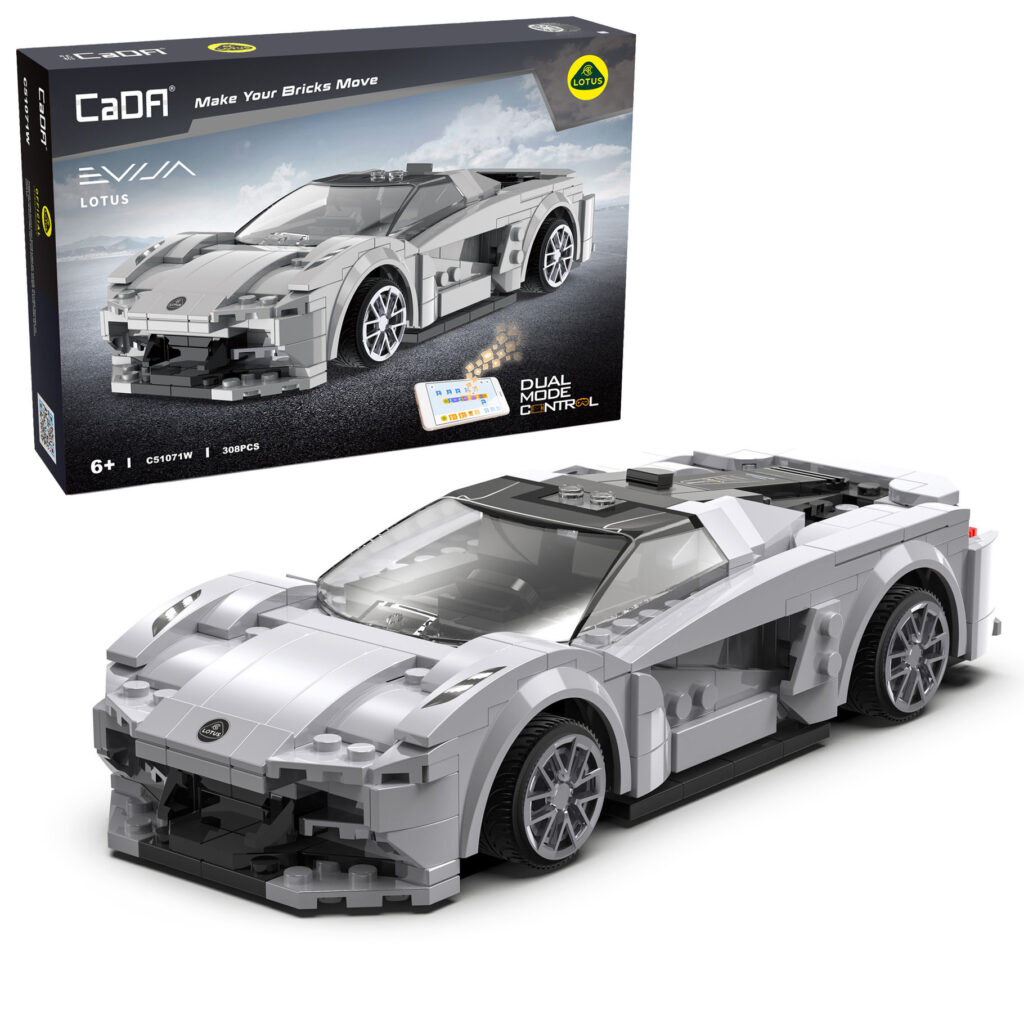
CaDA 1:20 Lotus Evija RC Car C51071W
Build and drive the officially licensed CaDA 1:20 Lotus Evija C51071W. This 308-piece RC car offers radio and app control, a 25m range and speeds up to 3.8km/h.
For the Builder Who Wants Something Interactive
Start With CaDA STEAM
Some people finish a construction model and immediately put it on a shelf.
Others want to press a button and see what it can do.
If you’re in the second group, explore CaDA STEAM.
Depending on the individual model, STEAM products can introduce motors, remote control, app operation and programming alongside the construction itself.
This changes the relationship you have with the finished model.
The building process is only part of the experience.
Why This Is a Good First CaDA Build
✓ Interactive after construction
✓ Introduces powered functions
✓ Great for technically curious builders
✓ Remote and app-controlled options available
✓ Combines building with technology
A Good Example
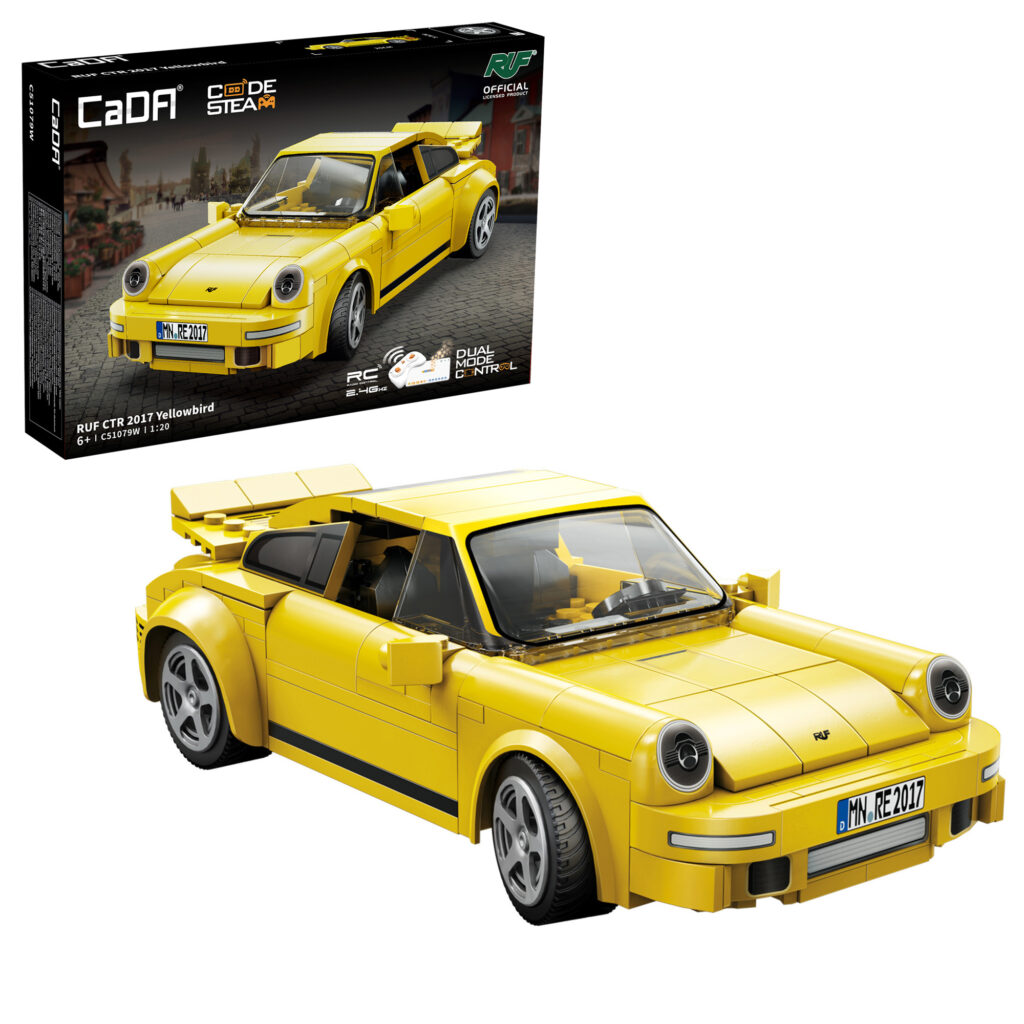
The RUF CTR 2017 Yellowbird is a useful illustration of what makes this part of the range different.
Rather than choosing it purely because it’s a car, you’re choosing it because you’re interested in the combination of construction and control.
That distinction is important.
For the Mechanically Minded Builder
Start With Construction & Farm
If you find yourself more interested in how a machine works than how fast a supercar looks, we’d point you towards Construction & Farm.
This collection demonstrates one of CaDA’s greatest strengths.
Engineering doesn’t have to mean sports cars.
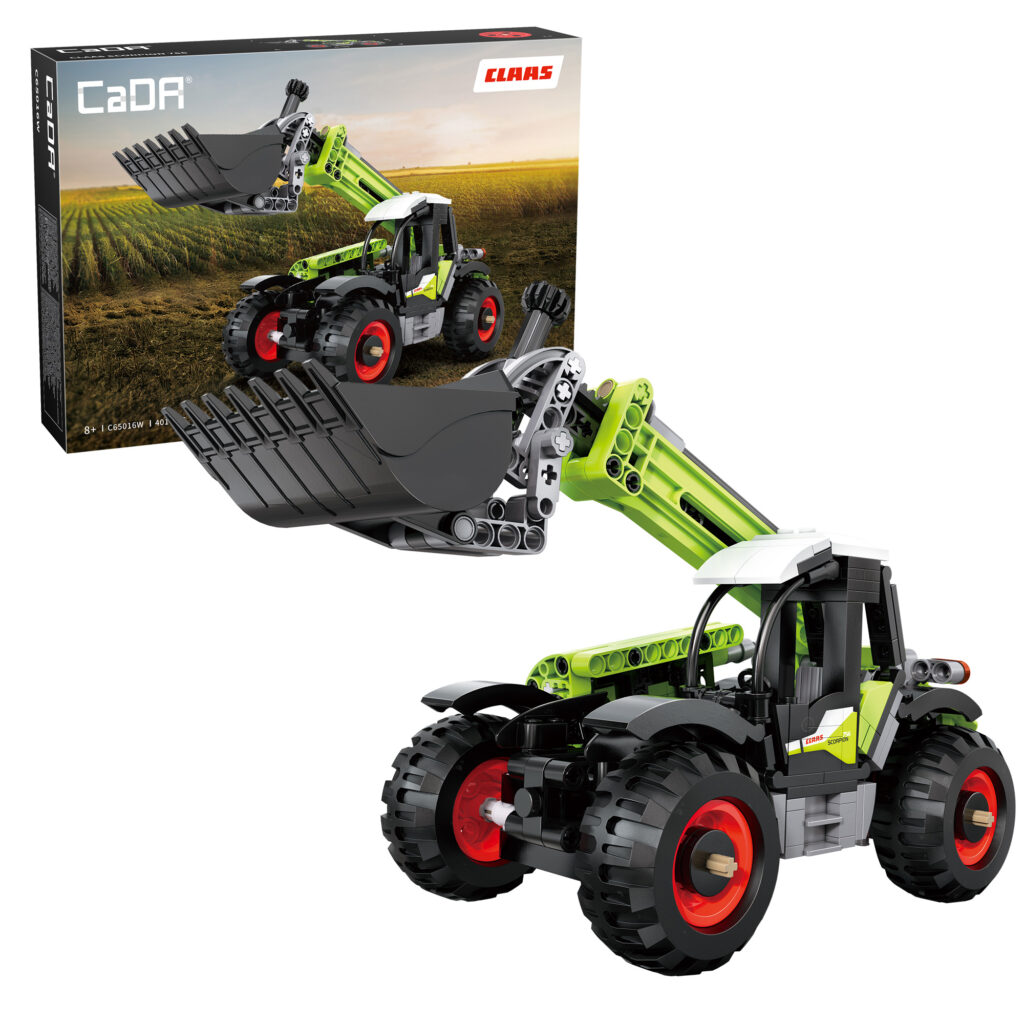
Tractors, cranes, excavators, agricultural equipment and construction machinery can provide fascinating building projects because their functions are often visible.
Arms move.
Attachments operate.
Vehicles steer.
Mechanical assemblies have an obvious purpose.
For someone who enjoys understanding machinery, that can be enormously satisfying.
Why This Is a Good First CaDA Build
✓ Strong engineering focus
✓ Visible mechanical functions
✓ Very different from conventional car sets
✓ Excellent for machinery enthusiasts
✓ Wide range of project sizes
Our Advice
Don’t automatically choose the largest machine.
Look through the range and find a piece of equipment whose function interests you.
A tractor, crane and excavator may all involve engineering, but they offer very different building experiences.
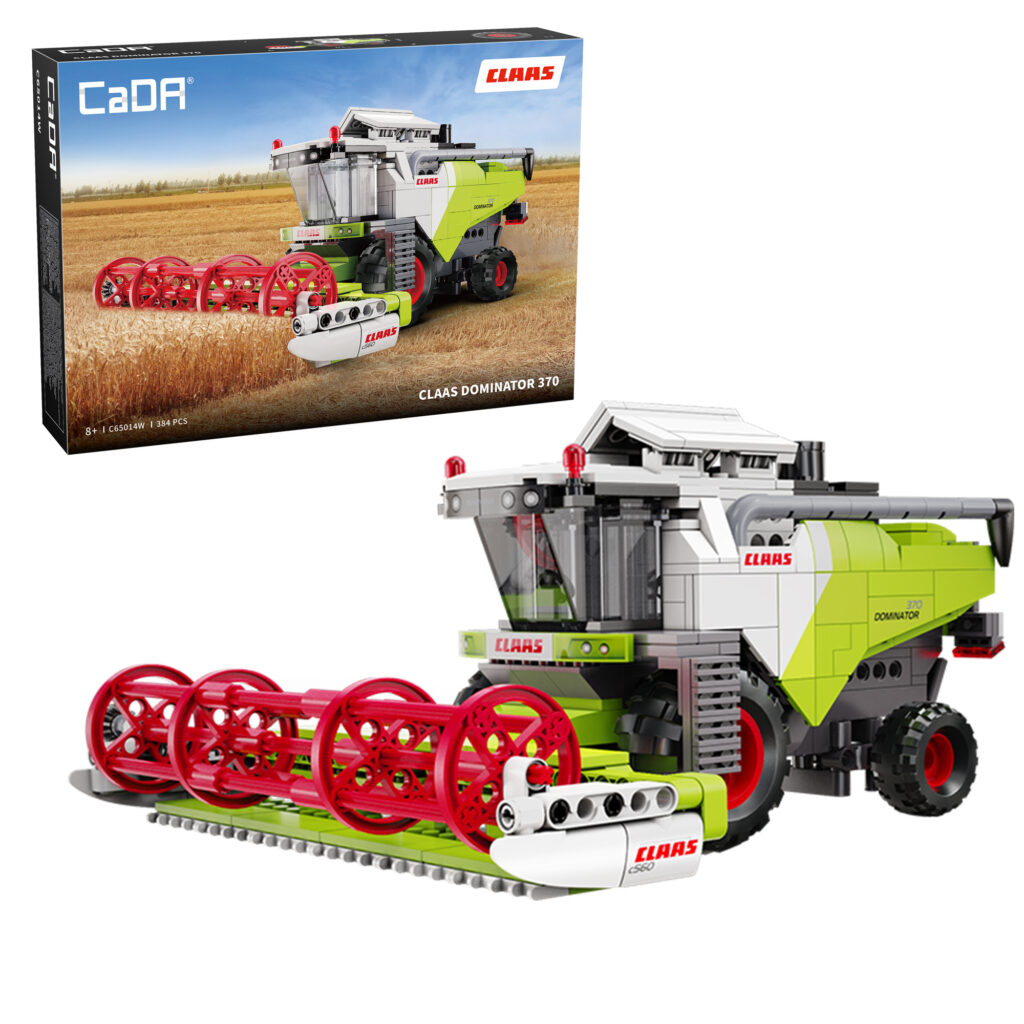
CaDA CLAAS Dominator 370 Combine Harvester C65014W
CaDA CLAAS Dominator 370 Combine Harvester C65014W is a licensed 384-piece model with a working cutter bar, steering knob, moving auger and opening grain tank.
For the Architecture and Diorama Fan
Start With the Building Series
Not interested in vehicles at all?
That’s absolutely fine.
The CaDA Building Series can be a fantastic introduction to the brand.
Instead of steering systems and drivetrains, these projects focus on walls, furniture, façades, signage and small environmental details.
The experience is closer to creating a miniature location.
That’s particularly appealing if you already enjoy dioramas, model railways, miniature scenery or architectural models.
Why This Is a Good First CaDA Build
✓ No interest in cars required
✓ Detailed interiors and exteriors
✓ Excellent display potential
✓ Buildings can be collected together
✓ Strong appeal for diorama builders
A Good Example
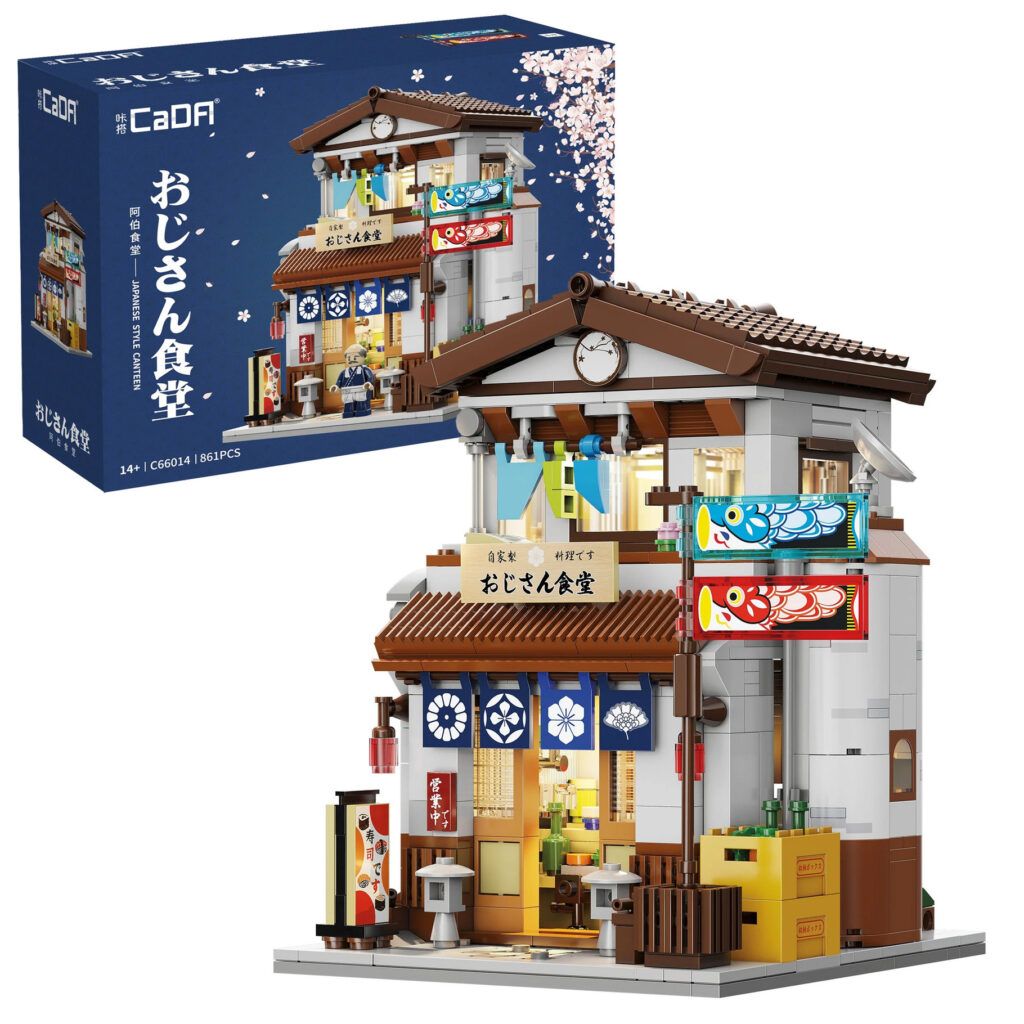
The Japanese Style Canteen demonstrates how different this experience can be from constructing a vehicle.
Rather than assembling one machine, you’re gradually creating a complete miniature environment.
For the right builder, that can be far more satisfying than any supercar.
For the Creative Builder
Start With Flowers Artizan
If you’re looking for something relaxing and decorative, consider Flowers Artizan.
These sets take CaDA in another completely different direction.
Instead of recreating a vehicle or building, the focus is on constructing shapes, stems, leaves and floral arrangements that become decorative objects once complete.
This makes them particularly appealing to people who enjoy crafts, interior decoration or simply want a quieter building project.
Why This Is a Good First CaDA Build
✓ Relaxing construction experience
✓ Designed for display
✓ Compact options available
✓ Excellent gift potential
✓ Very different from traditional construction models
A Good Example
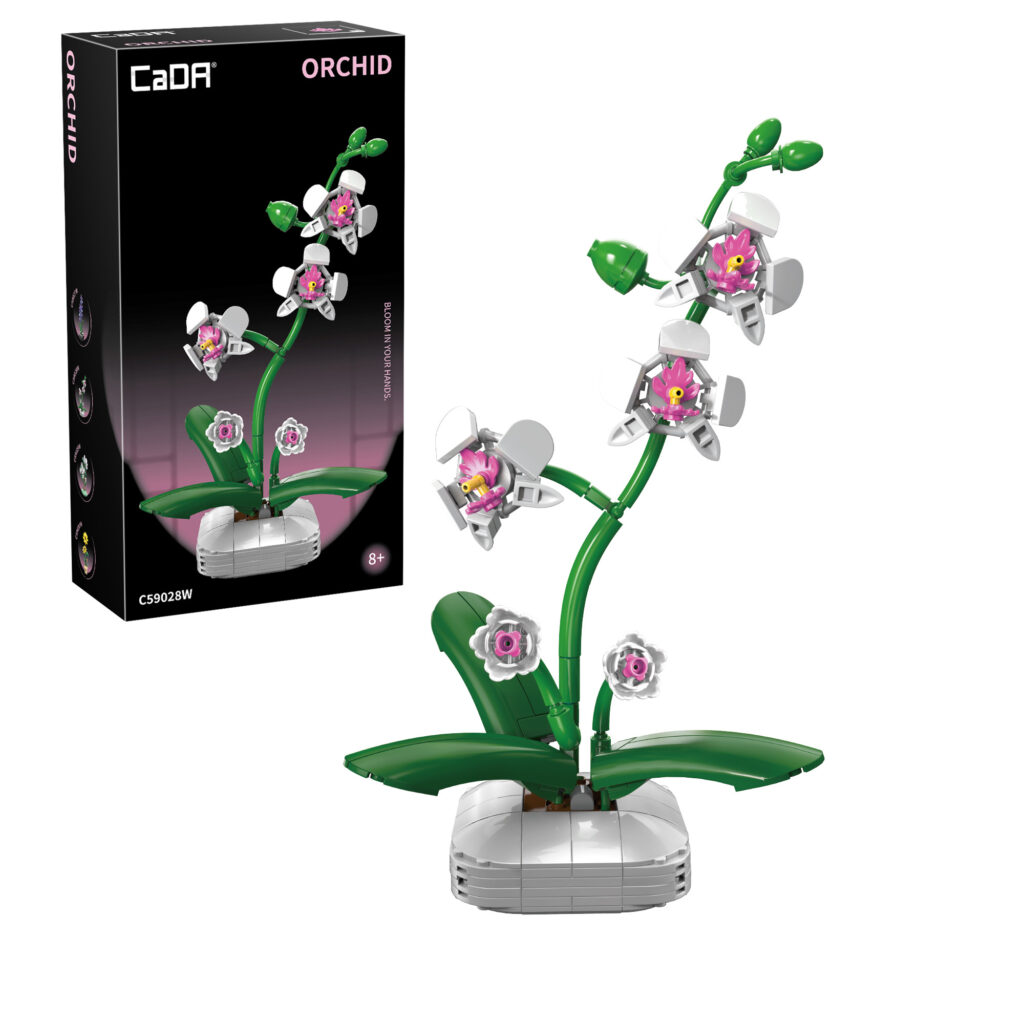
A smaller planter such as the CaDA Orchid Planter can provide an approachable introduction without requiring the space or time associated with a large vehicle.
If you enjoy it, you can then explore the larger Artizan arrangements.
Six Different Ways to Start With CaDA
Recommended products
What About the Master Series?
You may have noticed that we haven’t included a Master Series model among our default first-build recommendations.
That’s deliberate.
We think the Master Series is one of the most interesting parts of CaDA’s entire range, but that doesn’t automatically make it the best starting point for everyone.
If you already build complex construction sets, scale models, Gundam kits or other detailed hobby projects, you may be perfectly comfortable starting there.
If you’re completely new, however, a smaller project lets you discover whether you enjoy CaDA’s building system before committing to a major build.
Think of Master Series as an option rather than a required destination.
Some builders will want to get there eventually.
Others may discover they much prefer collecting compact cars, buildings or machinery.
That’s precisely why CaDA’s range is so interesting.
Seven Mistakes We’d Avoid When Choosing Your First CaDA Set
Choosing a first model is fairly straightforward once you know what you’re looking for.
There are, however, a few common traps worth avoiding.
Buying Purely by Piece Count
More pieces doesn’t automatically mean more enjoyment.
Piece count can help indicate the scale of a project, but the subject and type of construction matter far more.
Assuming Bigger Means Better
Large models can be spectacular.
They also take longer to build, cost more and require more space.
Buy a large model because you want a large project – not because you think that’s the “proper” way to experience CaDA.
Ignoring the Finished Dimensions
Always check how big the completed model will be.
This is particularly important with larger cars and premium sets.
Work out where you’re going to display it before it arrives.
Assuming Every Car Is Remote Controlled
It isn’t.
CaDA produces manual, mechanical and powered vehicle models.
If remote or app control matters to you, check the individual listing before purchasing.
Assuming Every Powered Set Includes the Same Electronics
Power configurations vary between models.
Always read the box contents and product information rather than assuming motors, controllers, batteries or other components are included.
6. Choosing the Collection Before the Subject
Don’t decide you need a particular CaDA collection simply because you’ve heard it’s popular.
Start with what interests you.
A £15 model of your favourite car could give you more enjoyment than a premium project you chose purely because somebody described it as the flagship.
Forgetting That This Is Supposed to Be Enjoyable
This may be the most important point.
Your first CaDA set isn’t an exam.
You don’t need to prove anything by choosing the hardest model.
Pick something that makes you look forward to opening the box.
That’s the right place to start.
Frequently Asked Questions
What Is the Best CaDA Set for a Beginner?
There isn’t one universal answer that fits everyone.
For car enthusiasts, a compact 1:24 model is an excellent starting point. Adults wanting something more substantial may prefer 1:20, while architecture fans might be happier with the Building Series, you need to consider what is right for you personally.
Choose according to your interests rather than searching for one model that’s supposedly best for everybody.
Are CaDA Sets Difficult to Build?
Difficulty varies considerably across the range.
Smaller models can be very approachable, while large engineering projects and Master Series sets provide a more involved experience.
Check the recommended age, piece count, functions and individual product information before purchasing.
What CaDA Scale Is Best for Beginners?
For cars, 1:24 is an excellent introduction because the models are compact and manageable.
However, adults with previous construction-model experience may be perfectly comfortable beginning with 1:20 or something larger.
Should My First CaDA Set Be Motorised?
Only if motorisation interests you.
If you want to operate the model after construction, powered functions can add considerable value.
If you’re primarily interested in building and display, a manual model may suit you just as well.
Do I Need a CaDA Power Pack?
Not for every set.
Some models are manual, some include powered components and others may support separate upgrade components.
Always check the individual product listing before ordering a Power Pack.
Is CaDA Suitable for Adults?
Yes.
The range includes everything from small accessible models to substantial engineering projects aimed at experienced builders and collectors.
If you’re specifically looking for an adult project, our Best CaDA Sets for Adults guide explores the range in more detail.
Can I Start With a CaDA Master Series Set?
Yes, particularly if you already have experience with construction models or other detailed hobbies.
For a complete newcomer, however, we’d normally suggest considering a smaller model first.
Our CaDA Master Series Guide explains what to expect from these premium projects.
So, Which CaDA Set Should You Buy First?
If you’ve reached this point hoping we’d name one model that everybody should buy, you may be slightly disappointed.
We don’t think that model exists.
And that’s a good thing.
CaDA’s range is broad enough that two people can discover the brand at exactly the same time and have completely different first experiences.
One might build a small licensed car.
Another might construct a Japanese building.
Someone else may spend their time working out how a tractor mechanism operates.
Another builder may assemble flowers for their desk.
All four have chosen correctly if they enjoyed the experience.
So our final advice is simple:
Start with the model that makes you want to build it.
Then consider the scale.
Check the functions.
Look at the finished dimensions.
Set a budget you’re comfortable with.
And make sure you understand what’s included.
If all of those things line up, you’ve probably found the right first CaDA set.
Ready to Choose Your First CaDA Build?
You can explore the complete CaDA range available from Bomran Games online, including cars, STEAM models, construction machinery, buildings, creative sets and premium Master Series projects.
If you’re local to us, you can also visit Bomran Games in Corringham, Essex and explore the range in store.
Continue Exploring CaDA
Completely New to the Brand?
What Is CaDA? The Complete Beginner’s Guide
Not Sure Which Collection Suits You?
Understanding the CaDA Range: Which Collection Is Right for You?