

You have mixed a lovely highlight colour, reached for the miniature and discovered that the paint now has ambitions to become a wash. Elsewhere on the same palette, yesterday’s brown is developing a crust. For something built around a sponge and a sheet of paper, a wet palette can occasionally feel surprisingly contrary.
Most wet palette problems are easier to solve when you separate three things: the water in the reservoir, the contact between paper and sponge, and the consistency of the paint itself. Change one at a time, test a small amount, and resist pouring more water over everything.
This guide is for troubleshooting water-based acrylic miniature paints. If you are still choosing equipment, our Game Envy painting-tools guide covers palettes, sizes and accessories. Here, the aim is to get the palette already on your desk behaving properly.
Start with a small reset
A wet palette slows drying by supplying moisture through a suitable painting surface. It does not automatically thin every colour to the right consistency, and you should not expect it to revive fully dried acrylic paint.
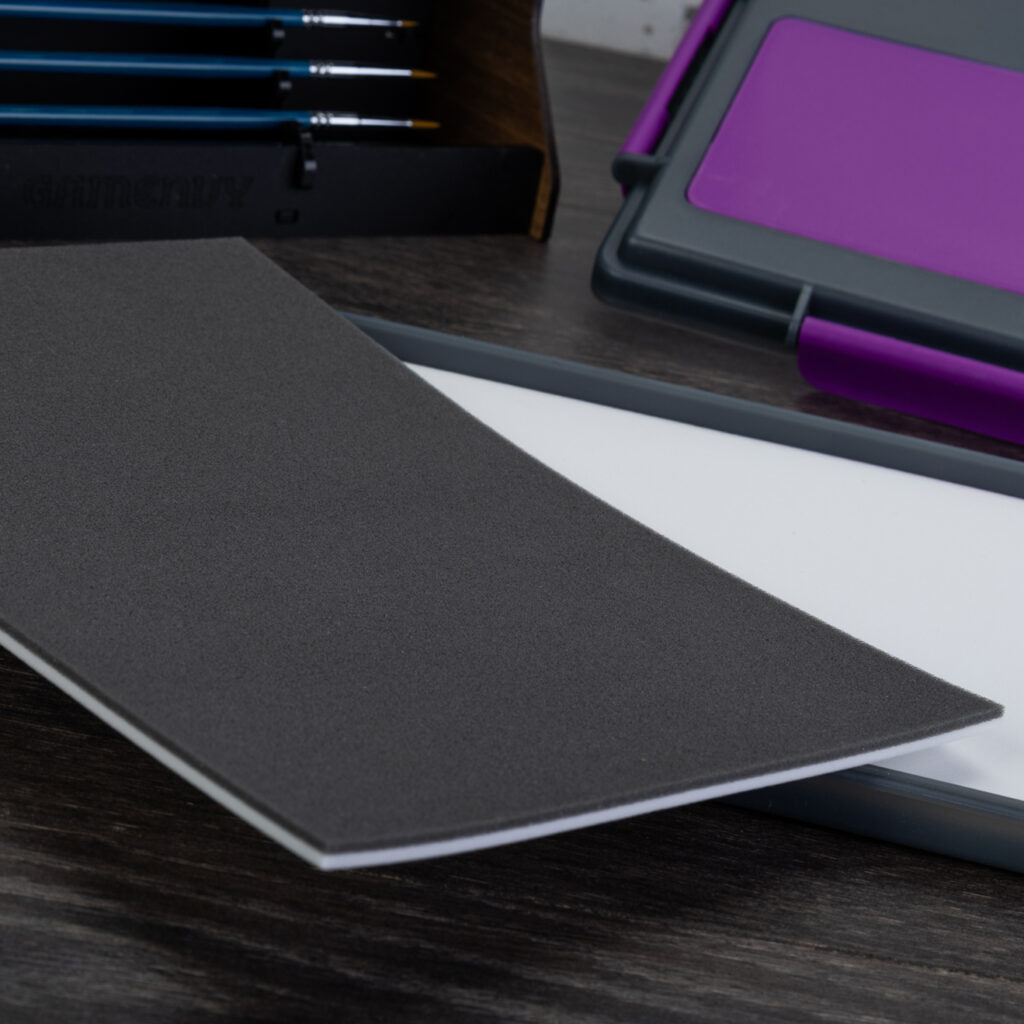
Before blaming your paint, check that the sponge is hydrated according to its instructions, the correct paper is lying against it, and there is no loose puddle sitting on top. Use clean water rather than your brush-rinsing water. If the paper is damaged or covered in old mixtures, a fresh sheet makes the next test much easier to judge.
Follow the instructions for your particular palette. Some papers need an initial soak; others are designed to be laid directly onto the wet sponge. Some have a specified upper surface. Sponge-care instructions differ too: The Army Painter warns against wringing its Hydro Foam, while Masterson recommends removing water from its own sponge before storage. Do not transfer one maker’s method to a different foam.
Wet palettes and replacement parts
-

Game Envy Exemplar Wet Palette Paper Refills – 50 Sheets
Price range: £13.75 through £16.75 -

Game Envy Exemplar Wet Palette Dual-Density Sponge Refills – 2 Pack
Price range: £7.50 through £9.50 -

Game Envy Exemplar GO Wet Palette – Blue or Red
£29.50 -

Game Envy Exemplar PRO Wet Palette – Blue GE-PROPAL-BLU
£39.50


When the paint becomes too watery
First ask when it became watery. Paint that spreads immediately needs a different check from paint that looked fine until it spent the night under the lid.
When paint spreads as soon as you add it
Look for water on the paper’s upper surface. It can reach the paint when the reservoir is overfilled, the palette is tilted or water is poured across the mixing area. Remove excess water carefully and restore the level specified for your palette. The paper should sit against the sponge, not float around with your colours.
On newer Game Envy dual-density sponges, use the high-density side on top for normal painting. The low-density side facing upwards is intended for wetter mixes such as glazes and washes. Check which sponge you actually have before treating this as a fault.
Next, put down a small fresh dab of thoroughly mixed paint without adding water to it. Use a clean brush that is damp rather than dripping. Pull a little paint into a separate working area and test it on a spare, primed model part.
If that sample behaves normally, your previous mix may simply have been thinned too far. Start the working mix again instead of trying to rescue an ever-expanding puddle. Add any water or compatible medium in small increments. There is no reliable universal paint-to-water ratio: the colour, formulation and job all matter.
When paint becomes watery after storage
A closed palette can keep exchanging moisture with the paint while you are away. Returning to a thin mixture does not necessarily mean you flooded it during the original session.
Open it before painting and inspect each colour. If the mixture has merely separated, gently remix a small portion and test it. If it remains far too thin, use fresh paint for work that needs predictable coverage. Do not spread yesterday’s watery mixture across a carefully finished model simply because it is still technically wet.
For the next session, follow the maker’s advice on the water level, seal and any adjustable vent. Treat overnight storage as a convenience to check, rather than a promise that every colour will be unchanged.
When paint dries out on the palette
Begin underneath the paper. A dry sponge cannot keep supplying moisture, and an air pocket breaks contact with the painting surface. If one corner dries while the rest remains usable, check whether the paper has lifted there.
Top up in the way your palette manufacturer recommends, keeping the added water away from your mixtures. If the sponge has dried substantially or the paper no longer sits flat, pause and reset the palette rather than chasing one dry patch after another.
Then look at the room. A radiator, sunny windowsill or fan can make a carefully prepared palette lose water more quickly. Move it away from direct heat and draughts, and check hydration during a longer session.
How you arrange the paint also matters. A thin smear has much more exposed surface relative to its volume than a compact dab. Keep a small reserve of each colour and pull out only what you need for the next few brushstrokes. There is little benefit in turning the whole sheet into a beautifully organised selection of drying streaks.
If a skin has already formed, leave it out of the working mixture. Fresh paint is preferable to dragging tiny dry fragments through a smooth basecoat. For broader coverage and brush-control problems, see our guide to common miniature-painting mistakes.
When the paper curls or lifts
New paper can curl as it first takes up moisture, and that alone is not a fault. Give it the settling time specified by its maker before deciding that something is wrong. Trying to pin down every moving edge immediately can turn a simple setup into a wrestling match.
If it stays lifted, check the fit and the contact underneath. An oversized sheet can catch on the tray walls, while trapped air leaves a raised pocket. For Game Envy paper, use clean hands or the supplied squeegee to smooth gently from the centre outwards. Follow the appropriate method for other surfaces, and do this before adding paint whenever possible.
Paper that curls later in the session may be losing moisture. Check the sponge and nearby heat or airflow first. Once the sponge is properly hydrated and the sheet has settled, persistent lifting is exactly where palette weights can help.
Bomran stocks Game Envy Palette Shields, a set of four low-profile wet-palette weights designed to help keep paper flat. Place them on clean areas around the edges of the hydrated sheet, clear of your paint, to hold lifting corners down. These are generic paper weights, so you can use them with any brand of wet palette. They sit on the paper rather than attaching to a particular tray or fitting.
Featured product: Palette Shields
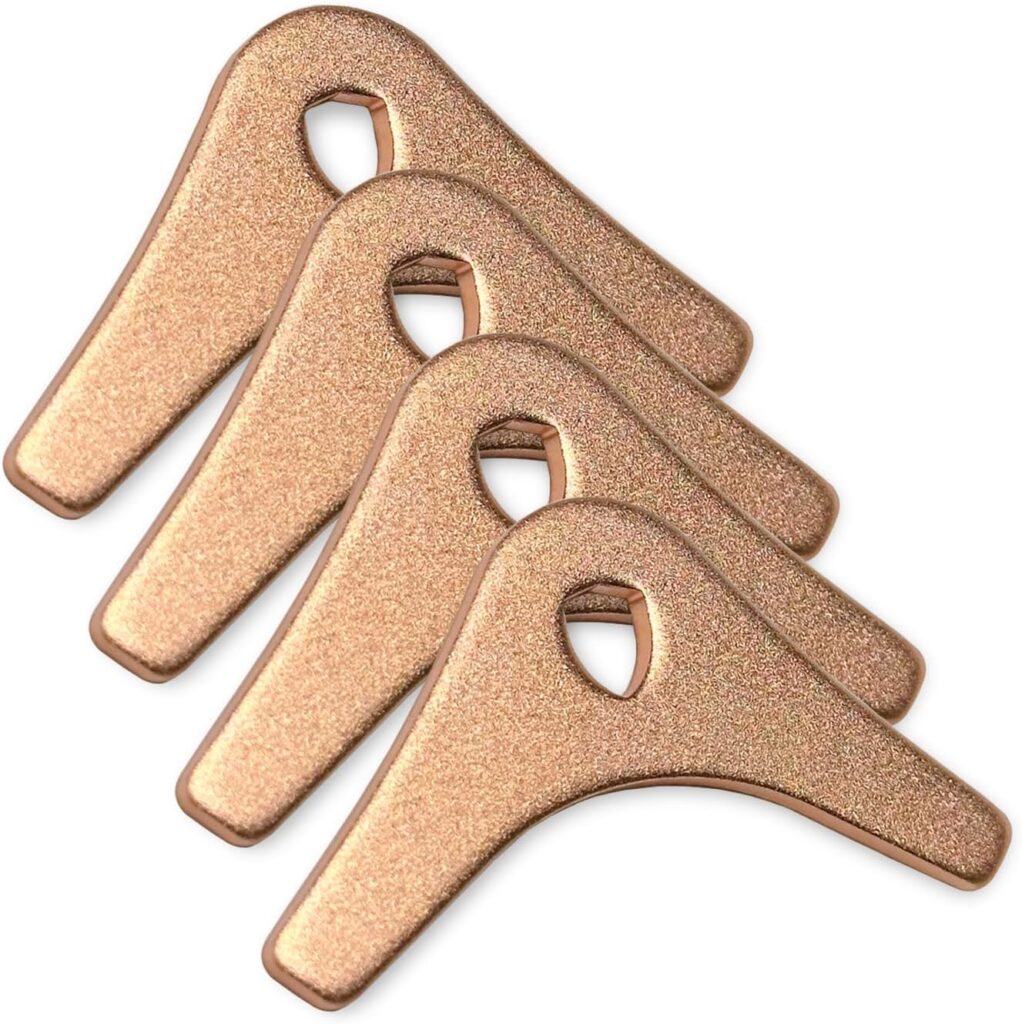
Weights help hold the paper in contact with the sponge; they cannot refill a dry reservoir or repair a damaged sheet. Game Envy also markets Palette Shields as antimicrobial, but keep up your normal cleaning routine. They are a useful accessory, not a reason to leave old paint and dirty water sitting indefinitely.
Use paper intended for the system, particularly while diagnosing a fault. Kitchen papers vary in coatings and permeability, so swapping between baking paper, greaseproof paper and purpose-made sheets adds another unknown. Once you have a reliable baseline, it is much easier to judge whether an alternative really works.
When paint beads on the paper
A rounded bead on the palette is not the same problem as paint retreating from the miniature. Judge the paint by what happens when you load the brush and make a test stroke, not by whether every colour spreads into an identical shape on the paper.
Check the paper instructions first, including whether there is a designated painting side. If the sheet has picked up grease, soap residue or other contamination, replace it and try a clean sample. Do not add washing-up liquid to the paint as a shortcut.
If the paint transfers smoothly from the brush and behaves well on a primed test piece, there may be nothing to correct. If it beads on the model too, investigate that surface and the paint mixture separately. Adding more reservoir water is unlikely to tell you which one caused the problem.
Checking paint from previous sessions
Paint may remain usable, but inspect it before committing it to the model. A wet palette is a working tool, not a guarantee of long-term paint storage.
Use a clean brush or mixing tool to test a small portion. Can it return to a smooth mixture? Does it flow and cover as expected? Let a test stroke dry so that its appearance, not just its wet colour, informs the decision.
Discard paint containing dry skins, gritty particles or signs of contamination. If you need to repeat a precise colour across a squad, record the paints and approximate proportions when you mix it. A simple recipe is more useful than relying on one puddle surviving until the last shoulder pad.
Dealing with mould or a musty palette
Stop using a palette with visible mould or a persistent unpleasant smell. Discard the affected paint and paper, then clean the tray and lid according to the manufacturer’s directions. For visibly mouldy foam, replacement is the cautious choice. Check the maker’s cleaning and replacement guidance rather than assuming a rinse is enough.
A paint stain alone is not proof of mould, but uncertain, deteriorating materials are a poor foundation for a fresh painting session. Check the maker’s guidance if you are unsure what you are seeing.
For routine care, remove old paint and water, clean the parts as instructed and allow them to dry fully before longer storage. Keep dirty brushes out of the reservoir. Antimicrobial materials or accessories do not remove the need for cleaning.
Avoid improvised bleach, disinfectant or vinegar treatments unless the manufacturer specifically approves them for the exact component. Advice for one type of foam should not be assumed safe for another.
For a fresher palette between clean-outs, Game Envy Palette Shields can be a useful extra. Game Envy describes these antimicrobial weights as helping keep wet palettes fresh for longer, making them relevant when musty smells are a recurring problem. They also hold the paper flat. Use them alongside regular cleaning, not as a way to rescue mouldy paint, paper or foam.
Know when to use a dry palette
Not every paint needs moisture supplied from below. Very fluid paints, washes and specialist formulations can be easier to control in a clean, non-porous well. Check the paint manufacturer’s advice before putting them on a wet palette.
For example, The Army Painter advises against using its Speedpaint on a wet palette. That is a product-specific instruction, not a reason to declare every transparent or metallic paint unsuitable. For unfamiliar products, test a small amount separately and keep specialist solvents away from a water-based palette system.
The separate dry mixing tray supplied with Game Envy’s Exemplar palettes is handy for this: keep ordinary acrylic mixes on the wet surface and use a well for a paint that needs its consistency left alone.
Drybrushing also has a different requirement: preparing a brush that leaves a controlled amount of paint on raised detail. Use an appropriate separate surface for that job rather than trying to make the wet palette serve every technique.
Replace the part that needs replacing
A troublesome session does not automatically call for a new palette. Start with fresh water, a sound sponge and the correct paper, then repeat the small paint test.
For Exemplar owners, Bomran’s Game Envy refill paper and replacement sponge range let you renew those components separately. Select the refill for your actual palette model rather than judging by a photograph or a similar-sounding size.
In our opinion at Bomran, Game Envy is the best wet-palette range currently available. The Exemplar range’s dual-density sponges, adjustable vent and separate dry mixing trays are practical reasons for that recommendation, alongside readily replaceable paper and sponges. A good palette should help you control the session, and those details give you useful options.
If your setup is working but you need more mixing room, explore the Game Envy collection and compare the options in our existing guide. More space is useful when it solves a real inconvenience; it will not fix an overfilled reservoir.
The best next step is usually a modest one. Reset the palette, choose one familiar colour and make a few controlled strokes on a spare part. Once the paint behaves as you expect, return to the miniature. That highlight colour has a job to do.